
Why Is Himalayan Salt Pink? The Science Behind Its Natural Color
Himalayan pink salt is well known for its unique pink color and natural source. Many people are curious about why is Himalayan salt pink and what gives it this distinctive appearance. Himalayan salt crystals typically range from light pink to deeper reddish tones, in contrast to ordinary table salt, which appears bright white. This salt’s color is entirely natural. It is caused by minerals found in salt deposits formed millions of years ago. Let’s explore its origin and mineral composition. This article will examine the science underlying Himalayan salt’s color, its origin, its mineral composition, and whether it has any true benefits over regular table salt.
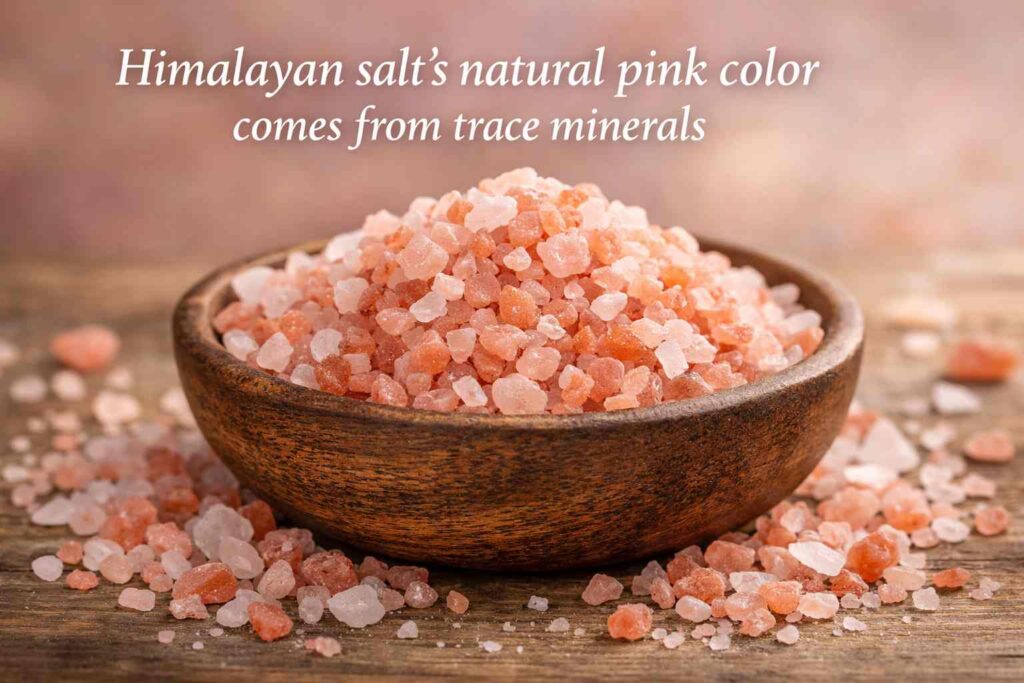
What Is Himalayan Pink Salt?
A kind of rock salt called Himalayan pink salt is extracted from underground deposits close to the Himalayan mountains. Ancient seas evaporated millions of years ago, leaving behind salt layers that were eventually covered by rock and sediment. The salt’s distinctive color and flavor come from the natural trace minerals that are preserved through minimal processing.
Himalayan rock salt, Sea salt, and Table salt
While sodium chloride is the primary component of all salts, their sources and methods of processing vary.
Himalayan Rock Salt
The Himalayan salt were taken from underground salt deposits. Trace minerals are present in minimum amounts because the salt undergoes very little processing.
Sea Salt
Created when sea water evaporates Depending on the source, it might include minerals.
Table salt
Extremely advanced often contains additives such as anti-caking agents and usually improved with iodine.
Because Himalayan salt is less processed, its natural minerals and structure are preserved, giving it a pink hue.
What Makes Himalayan Pink Salt Pink?
The minerals that automatically exist in the salt crystals give Himalayan salt its pink hue. Very tiny amounts of minerals are trapped inside the crystal structure, even though sodium chloride (NaCl) makes up the majority of the salt. The distinctive pink hues found in Himalayan rock salt are produced by these minerals interacting with the salt during formation.
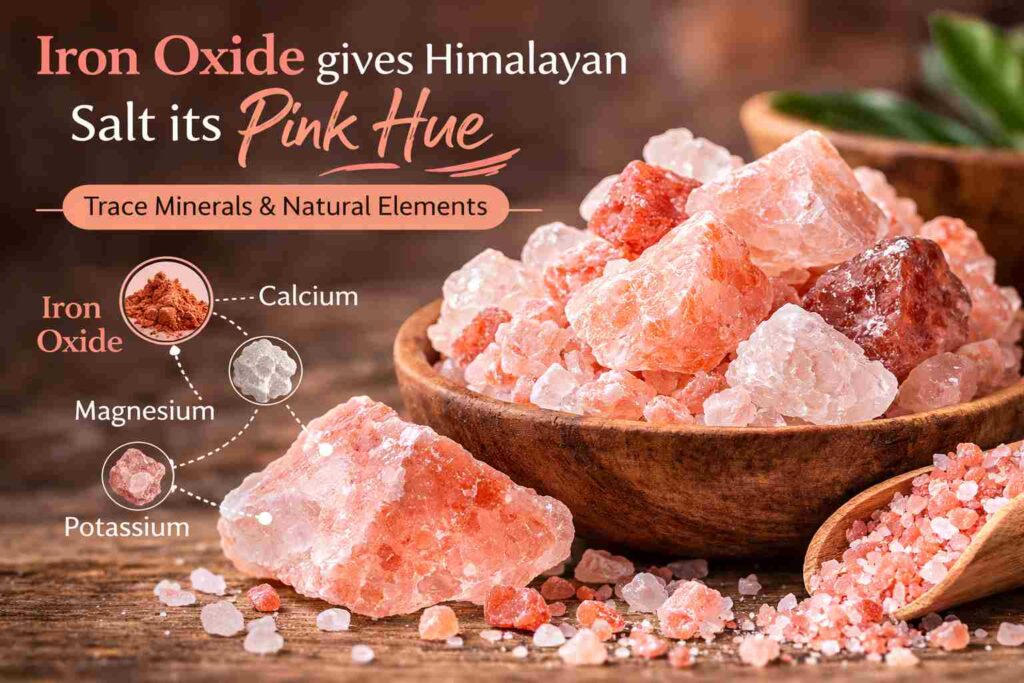
Iron Oxide – The Real Reason
The main cause of the pink hue of Himalayan salt is iron oxide, which is produced when iron and oxygen react. Depending on the iron content, the crystals’ tiny amounts of iron react over millions of years to produce pink to reddish hues.
Trace Minerals and Natural Crystallization
Himalayan salt has small amounts of iron oxide as well as the following minerals:
- Sodium
- Potassium
- Magnesium
The composition of the salt is influenced by these trace minerals. Himalayan salt got its unique color and structure from the burial and solidification of crystals created from evaporated seawater.
Where Does Himalayan Pink Salt Come From?
The Khewra Salt Mine, situated in Pakistan’s Punjab region, is the primary source of Himalayan pink salt. One of the biggest and most established salt mines in the world is this one.
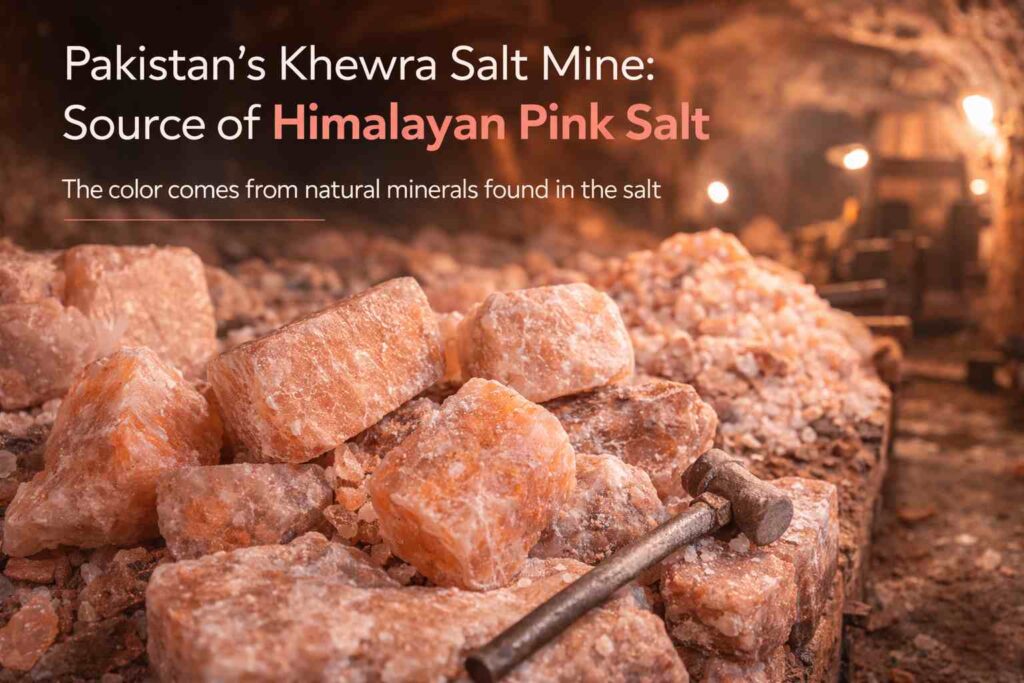
Khewra Salt Mine Explained
Seawater in the Khewra region evaporated millions of years ago, leaving behind thick layers of salt. Subterranean deposits were created when these layers were eventually buried beneath rock and sediment. The natural color and trace minerals of Himalayan pink salt are preserved when miners extract it from these deposits. Pakistan is closely associated with the origin of genuine Himalayan salt, as the majority of it is produced there today.
Is All Pink Salt Himalayan
Not all pink-looking salt is genuinely from the Himalayan region. Due to various minerals or environmental factors, a number of salts have a pink hue worldwide.
Himalayan Pink Salt
Pakistan’s Khewra Salt Mine is the source of Himalayan pink salt. Iron oxide and trace minerals that developed organically over millions of years in the salt crystals are primarily responsible for its pink hue.
Hawaiian Pink Salt
Alaea, a type of volcanic clay, is the source of the color of Hawaiian pink salt. During harvesting, the clay and salt combine to give it a pinkish hue.
Peruvian Pink Salt
The natural salt ponds in the Andes are the source of Peruvian pink salt, which is lightly pink due to the surrounding minerals. However, authentic Himalayan pink salt comes from the Khewra region of Pakistan, so it’s crucial to read the origin label.
Himalayan Pink Salt Minerals and Composition
Like other forms of salt, the main ingredient in Himalayan salt is sodium chloride. It does, however, also contain trace amounts of minerals that give it its color and natural qualities.
Sodium Chloride vs Trace Minerals
The majority of Himalayan salt has a sodium chloride content of 97–98%. Iron, calcium, magnesium, potassium, and other trace minerals are included in the remaining portion. Though they are present in comparatively small amounts, these minerals give the salt its subtle color and flavor variations.
Does Himalayan Pink Salt Have 84 Minerals?
The majority of the 84 trace minerals found in Himalayan pink salt are found in very small amounts. Its minerals primarily affect the color and structure of the salt; it is not a major source of nutrients.
Is Himalayan Pink Salt Good for You?
Himalayan pink salt is thought by many to be healthier than ordinary salt. Like other salts, it is primarily composed of sodium chloride even though it has a natural origin and contains trace minerals.
Potential Benefits (Evidence-Based)
Among the potential benefits are:
Less Processing
Typically, Himalayan salt is cleaned and crushed without extensive refining.
No Additives
It usually doesn’t contain anti-caking agents like table salt does.
Natural Taste
When cooking, a lot of people like the taste and texture.
What It Does NOT Do
In contrast to some internet claims, Himalayan pink salt doesn’t lead to weight loss, Purifies the body Heal illnesses. These assertions are unsupported by scientific data and are a part of popular pink salt health myths.
Himalayan Pink Salt vs Table Salt
Despite the fact that sodium chloride makes up the majority of both salts, they differ in a few ways.
Feature Himalayan pink salt Table salt
| Processing | Barely | Highly refined |
| Additives | None | Anti-caking Agents |
| Iodine | Usually not present | Often included |
| Color | Pink | White |
The biggest difference is the level of processing. While Himalayan salt stays closer to its natural state, table salt is refined to remove impurities and typically contains iodine.
Is Himalayan Pink Salt Safe?
When used in standard cooking quantities, Himalayan pink salt is generally safe for most people. It should still be used sparingly, just like any other kind of salt.
Heavy Metals – Should You Worry?
Small amounts of trace elements have been discovered in natural salts, such as Himalayan salt, according to certain research. Nonetheless, the levels found are usually very low and regarded as safe for regular consumption
Who Should Be Careful?
The following should watch how much salt they eat:
People who have high blood pressure
Sodium-sensitive individuals
People suffering from specific kidney diseases
For general health, limiting sodium intake is crucial, regardless of the kind of salt used.
Why Is Himalayan Pink Salt More Expensive?
Himalayan pink salt is more expensive than table salt because it is extracted from underground deposits in Pakistan, needs specialized equipment, needs to be exported, and is highly sought after as a premium natural product.
Common Myths About Pink Himalayan Salt
Several myths surround Himalayan salt.
“It’s healthier because it’s pink.”
Minerals give the salt its color, but this does not necessarily make it healthier.
“It contains less sodium.”
The sodium content of regular salt and Himalayan salt is almost identical.
“It cures diseases.”
There is no proof from science that Himalayan salt can cure illnesses.
People can use salt responsibly and make wise decisions by being aware of these myths.
Quick Summary – Why Is Himalayan Pink Salt Pink?
Iron oxide and trace minerals like potassium, calcium, and magnesium are the primary sources of color for Himalayan pink salt. It is mostly sodium chloride and should be used sparingly because it was formed from ancient evaporated sea beds.
FAQs:
Why is Himalayan pink salt pink in color?
Iron oxide, a naturally occurring substance created when iron and oxygen react, is the primary source of the pink color.
Does pink salt contain iron?
Yes, the pink hue of Himalayan pink salt is a result of the trace amounts of iron it contains.
Is pink Himalayan salt healthier than white salt?
Himalayan salt is less processed and contains trace minerals, but its sodium content is comparable to that of regular salt.
Where is Himalayan pink salt mined?
The Khewra Salt Mine in Pakistan is the primary source of Himalayan pink salt.
Is pink salt safe to use every day?
It is safe to use in moderation, just like any other salt.
One Response