
Pink Himalayan Salt and Epsom Salt: Differences, Uses, and Benefits
Introduction
Two popular natural products that are frequently used in baths, home remedies, and wellness regimens are Pink Himalayan Salt and Epsom Salt. Many people wonder if Pink Himalayan Salt and Epsom Salt are alike. Both are used for skin care and relaxation, but they differ chemically and functionally.
We’ll go over what makes each salt special, their main distinctions, the advantages of bath and foot soaks, safety issues, and how to pick the best one for your requirements in this guide.
What Is Pink Himalayan Salt and Epsom Salt?
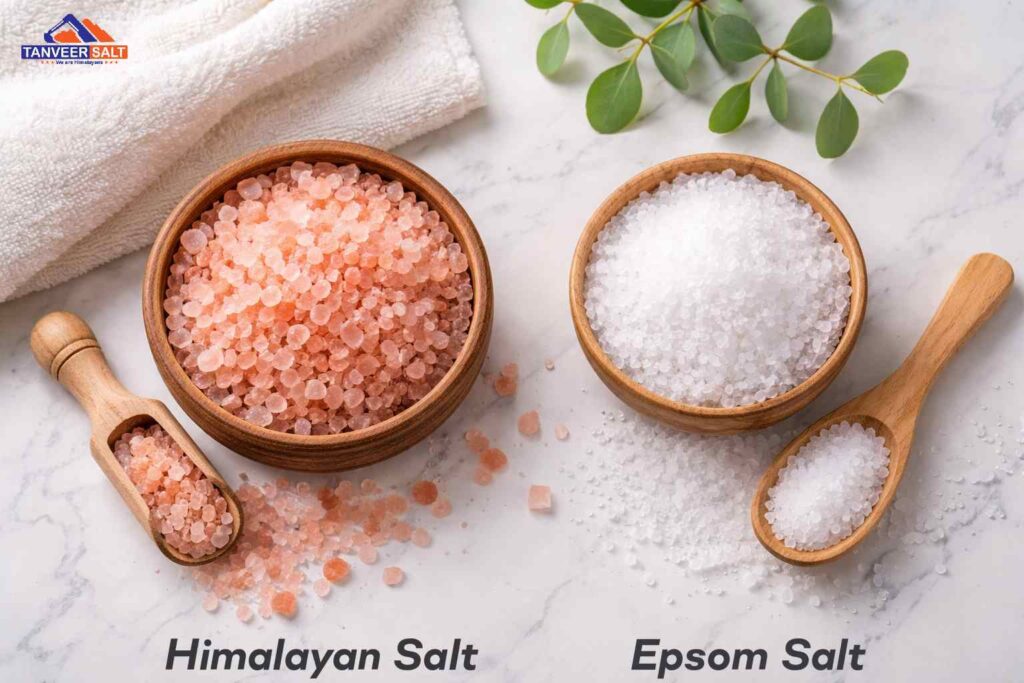
Natural rock salt extracted from the Himalayan mountains is known as Pink Himalayan Salt. It is primarily sodium chloride, with trace minerals like iron giving it its distinctive pink color. In addition to being edible and safe for cooking, Himalayan salt is frequently used in bath soaks to soothe and soften the skin.
In contrast, Epsom salt is not a real salt. It’s magnesium sulfate, which is well-known for its talent to calm muscles. Epsom salt is mostly used in baths to reduce stress, ease tense muscles, and relieve pain. Although it can be used as a laxative under medical supervision, it is generally not safe to consume.
Bath mixes that include both salts are frequently referred to as “Pink Himalayan Epsom Salt” or used for comparison.
Himalayan Pink Salt vs Epsom Salt
Chemical Composition
Their chemical composition is the primary difference:
Himalayan salt is made up of sodium chloride and trace minerals like iron, calcium, and potassium.
Epsom salt is magnesium sulfate, which helps soothe muscles.
Epsom salt is particularly prized for its high magnesium content, which makes it perfect for bath therapy, whereas Himalayan salt only contains trace amounts of the mineral.
Texture, Color & Source
- Himalayan salt: Because of iron oxide, coarse rock salt is naturally pink.
- Epsom salt: White crystalline form, smooth texture.
Himalayan salt is mined from salt deposits in the Himalayan region, while Epsom salt is created from mineral springs or purified magnesium sulfate.
Taste & Edibility
Because it is edible, Himalayan salt is frequently used in cooking as a healthier substitute for table salt. Because of its bitter flavor, Epsom salt is not advised for frequent use. According to medical advice, laxatives should only be used in small amounts.
Difference Between Epsom Salt and Himalayan Pink Salt
Key differences include:
- Purpose: While Epsom salt is primarily used for stress relief and muscle relaxation, Himalayan salt is used for cooking, relaxation, and bath soaks.
- Edibility: Epsom salt is not safe to consume, but Himalayan salt is.
- Mineral Content: Himalayan salt only contains trace minerals, whereas Epsom salt contains magnesium sulfate.
It’s a common misconception that Himalayan salt can be used instead of Epsom salt to relax muscles. It doesn’t offer the same magnesium benefits, but it can aid in general bath relaxation.
Pink Himalayan Epsom Salt Bath Benefits
Muscle Relaxation & Stress Relief
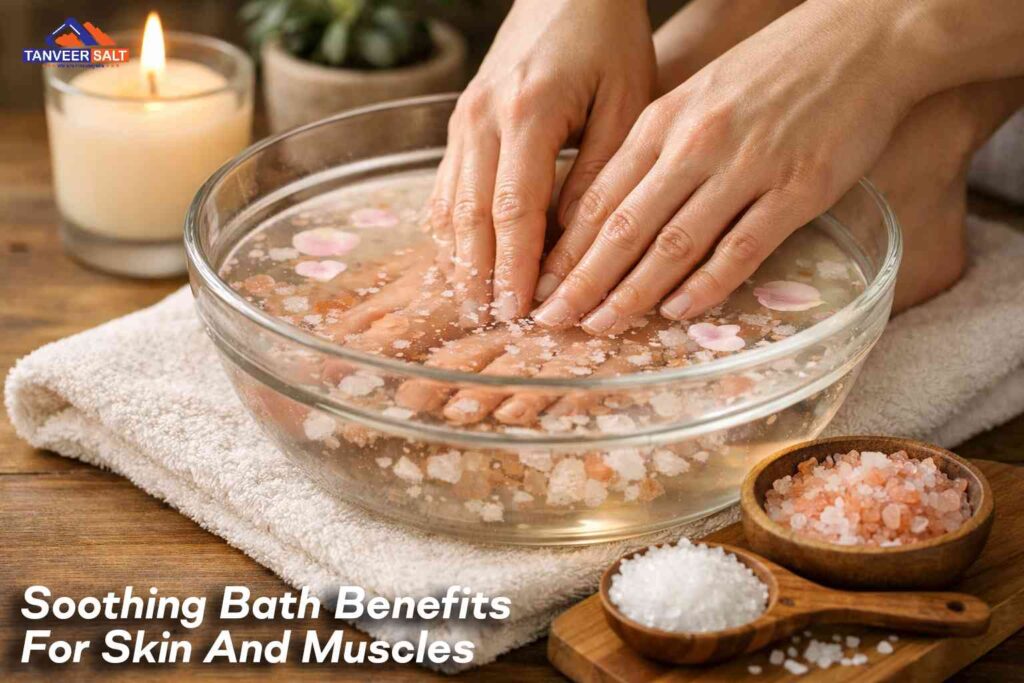
During a bath, the magnesium in Epsom salt can be absorbed through the skin, relieving stress and tense muscles. The bath is calming because the warm water itself encourages relaxation. The primary ways that Himalayan salt helps are through its calming properties and mineral-rich makeup.
Skin & Detox Benefits
The texture and softness of skin can be improved by both salts. While Epsom salt supports a mild detox effect through magnesium and sulfate absorption, Himalayan salt benefits contain trace minerals that may improve skin health.
Foot Soaks & Spa Use
- Pink Himalayan salt foot soak: Enhances circulation, soothes weary feet, and offers a calming experience.
- Epsom salt foot bath: Minimizes swelling, relieves pain, and encourages muscle healing.
Both salts are frequently combined in foot soaks at spas to improve skin health and relaxation.
Himalayan Salt Bath vs Epsom Salt Bath
Choosing between a Himalayan or Epsom salt bath:
- For muscle soreness: Epsom salt works better.
- For skin benefits: Himalayan salt has the potential to revitalize and soften skin.
- Combined use: When combined, they offer a well-rounded wellness experience that provides muscle relief and relaxation.
Can You Use Pink Himalayan Salt Instead of Epsom Salt?
Himalayan salt can be used in place of Epsom salt in baths for skin benefits and general relaxation, but not for relieving muscle soreness. Himalayan salt cannot replace Epsom salt’s ability to absorb magnesium, which is essential for easing pain.
Best alternatives: In the absence of Epsom salt, magnesium bath flakes or magnesium chloride salts are suitable alternatives. You won’t get the same advantages from regular table salt or sea salt.
Is Pink Himalayan Epsom Salt Safe?
Is Epsom Salt Edible or Safe to Consume?
Under medical supervision, Epsom salt can be used in small amounts as a laxative. It’s not supposed to be eaten every day. Caution is advised because excessive use may result in electrolyte imbalances or digestive problems.
Is Himalayan Pink Salt Safe for Daily Use?
Himalayan salt is safe for bathing and cooking. On the other hand, overindulgence could lead to a high sodium intake. For regular use, moderation is crucial.
How to Use Pink Himalayan Epsom Salt
Bath Recipe
- Full bath: Epsom salt (1-2 cups) plus ½ cup Himalayan salt.
- Water temperature: Warm, but not overheated.
- Duration: For fifteen to twenty minutes.
This mixture softens the skin and eases muscle tension.
Foot Soak Recipe
- Measurements: ½ cup Epsom salt plus ¼ cup Himalayan salt in a warm water basin.
- Duration: For fifteen to twenty minutes.
Perfect for easing sore, swollen feet after exercise or long days.
Pink Himalayan Salt vs Epsom Salt vs Regular Salt
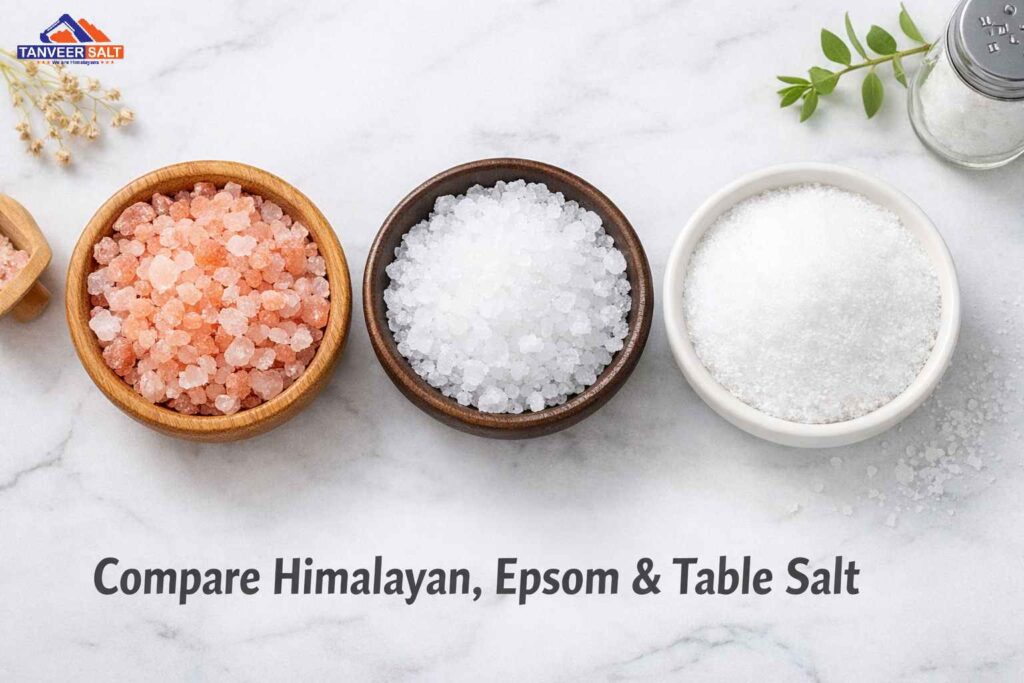
Salt Type | Composition | Edible | Bath Benefits | Muscle Relief | Skin Benefits |
Himalayan Salt | Sodium Chloride + minerals | ✅ Yes | ✅ Yes | ❌ No | ✅ Yes |
Epsom Salt | Magnesium sulfate | ❌ No | ✅ Yes | ✅ Yes | ✅ Yes |
Table Salt | Sodium chloride | ✅ Yes | ⚠️ Limited | ❌ No | ❌ No |
Which Is Better – Pink Himalayan Salt or Epsom Salt?
- Relaxation & skin care: Himalayan salt
- Muscle recovery: Epsom salt
- Cooking: Himalayan salt only
Tip: Based on your main objective, select the salt. Combining the two for baths offers a comprehensive wellness experience.
Frequently Asked Questions (FAQ)
Q1: Is pink Himalayan salt the same as Epsom salt?
A: They differ both chemically and functionally.
Q2: Can Epsom salt be used for cooking?
A: Regular consumption is not safe.
Q3: Does Himalayan salt contain magnesium?
A: Yes, in trace amounts. In contrast, Epsom salt is high in magnesium.
Q4: Can you mix Epsom salt and Himalayan salt in a bath?
A: The benefits of both salts for skin and relaxation are maximized when combined.
Q5: Is Epsom salt safe for daily baths?
A: Generally safe when applied topically; however, avoid ingestion and follow recommended guidelines.
Conclusion
Both Epsom and pink Himalayan salts are great for wellness, but they have different uses. Epsom salt is perfect for stress relief and muscle relaxation, while Himalayan salt is best for cooking, skin care, and relaxation. Understanding the differences enables you to select the appropriate salt and achieve the best outcomes in a safe manner.
Combining the two can provide the advantages of skin renewal and muscle relaxation for overall bath wellness. Enjoy a natural, calming bathing experience by using them mindfully.