
Is Himalayan Salt Good for You? Benefits, Nutrition, Facts & Risks
Is Himalayan salt good for you? Pink Himalayan salt is often marketed as a healthier alternative to regular table salt because of its natural pink color, trace minerals, and minimal processing. It is commonly used in cooking and wellness products.
However, Himalayan salt is still a major source of sodium. Its trace minerals are present in very small amounts and do not provide significant nutritional benefits. This guide covers Himalayan salt nutrition facts, benefits, risks, sodium, iodine, and how it compares with regular and sea salt.
What Is Himalayan Salt?
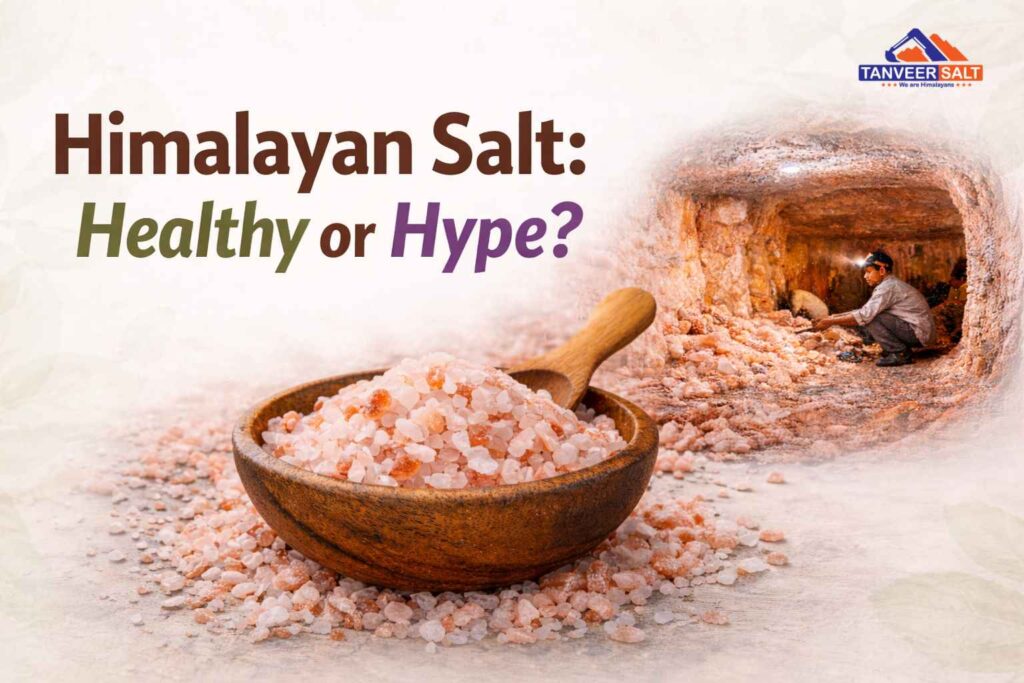
A naturally occurring rock salt is pink Himalayan salt. It is mostly extracted from Pakistan’s Khewra Salt Mine, which is located close to the Himalayan mountain range. The definition of Himalayan salt is straightforward. It is a mildly processed salt that originated in ancient seas millions of years ago. Himalayan salt is typically extracted by hand, in contrast to ordinary table salt. Chemicals are not used for cleaning. For this reason, it’s a more natural choice for a lot of people. In addition, a lot of people wonder what pink salt is and why Himalayan salt is pink. Trace minerals give Himalayan salt its pink hue. These consist of calcium, magnesium, potassium, and iron. Himalayan salt can have a dark reddish orange or light pink hue.
Where Does Himalayan Salt Come From?
Himalayan salt is a natural rock salt formed from ancient salt deposits. Much of the Himalayan pink salt sold commercially Himalayan salt comes from the Khewra Salt Mine in Punjab, Pakistan. The salt is mined from underground deposits and then crushed or ground into different grain sizes for culinary and other uses.
Unlike highly refined table salt, Himalayan salt generally undergoes less processing and retains its natural mineral composition, although these minerals are present in small amounts.
Why Is Himalayan Salt Pink?
Himalayan salt gets its pink color from naturally occurring minerals and other compounds in the salt deposits. Its color can range from very light pink to deeper pink, orange, or reddish shades depending on the mineral composition.
Although these minerals contribute to its color, they are present in relatively small amounts and do not make Himalayan salt a significant source of vitamins or minerals.
Himalayan Salt Nutrition Facts
Himalayan salt is mainly sodium chloride, so its primary nutritional contribution is sodium. It contains no meaningful amounts of calories, fat, protein, or carbohydrates. It also contains trace minerals such as calcium, magnesium, potassium, and iron, but these amounts are too small to provide significant nutritional benefits.
Nutrient | Approximate amount |
Calories | 0 |
Fat | 0 g |
Protein | 0 g |
Carbohydrates | 0 g |
Sodium | About 1,600–1,700 mg per teaspoon |
Other minerals | Trace amounts |
The exact sodium amount can vary depending on the product, grain size, and serving size.
Is Himalayan Salt Good for You?
Himalayan salt can be part of a balanced diet when used in moderation, but it is not significantly healthier than regular salt. It contains sodium, along with very small amounts of trace minerals, but these minerals do not make it a major source of nutrition.
Its natural color and minimal processing may make it appealing to some people, but there is no strong evidence that Himalayan salt provides unique health benefits such as detoxification, weight loss, or better blood pressure control. For most people, the most important factor is the total amount of salt and sodium consumed.
Potential Benefits of Himalayan Salt
Provides Sodium
Himalayan salt provides sodium, which the body needs for fluid balance, nerve function, and muscle function. However, it is not better than other types of salt for providing sodium.
Contains Trace Minerals
Himalayan salt contains small amounts of minerals such as calcium, magnesium, potassium, and iron. However, these amounts are too small to make it a significant source of these nutrients.
Minimally Processed
Himalayan salt generally undergoes less processing than refined table salt and retains its natural mineral composition. However, being less processed does not make it significantly healthier, as it still contains sodium.
Culinary Benefits
Himalayan salt has a mild salty flavor and is available in different grain sizes. Its pink color also makes it popular for seasoning, finishing dishes, and food presentation.
Disadvantages and Risks of Himalayan Salt
High in Sodium
Himalayan salt contains sodium just like other types of salt. Eating too much sodium can contribute to high blood pressure and increase the risk of cardiovascular problems. The important factor is the total amount of sodium consumed from all foods and drinks throughout the day, not the type of salt alone.
Blood Pressure
Himalayan salt can affect blood pressure when consumed in excessive amounts because it contains sodium. People with high blood pressure should monitor their overall sodium intake and avoid assuming that Himalayan salt is safer than regular salt.
Iodine Considerations
Himalayan salt is generally not iodized, so it may not provide a reliable source of iodine. Iodine is important for normal thyroid function and other essential processes in the body. People who rely heavily on non-iodized salt should make sure they get enough iodine from other dietary sources.
Who Should Limit It?
People with high blood pressure or other conditions that require sodium restriction should limit their salt intake. People at risk of iodine deficiency should also be mindful that Himalayan salt is generally not iodized. The overall amount of sodium in the diet matters more than choosing Himalayan salt over another type of salt.
Does Himalayan Salt Have Iodine?
Himalayan salt is generally not iodized, meaning iodine is not added to it in the way it is added to iodized table salt. Although Himalayan salt may contain naturally occurring iodine in small and variable amounts, it should not be considered a reliable source of iodine.
Iodine is essential for normal thyroid function and other important processes in the body. People who use Himalayan salt regularly should make sure they get enough iodine from other dietary sources.
Is Himalayan Salt Healthier Than Regular Salt?
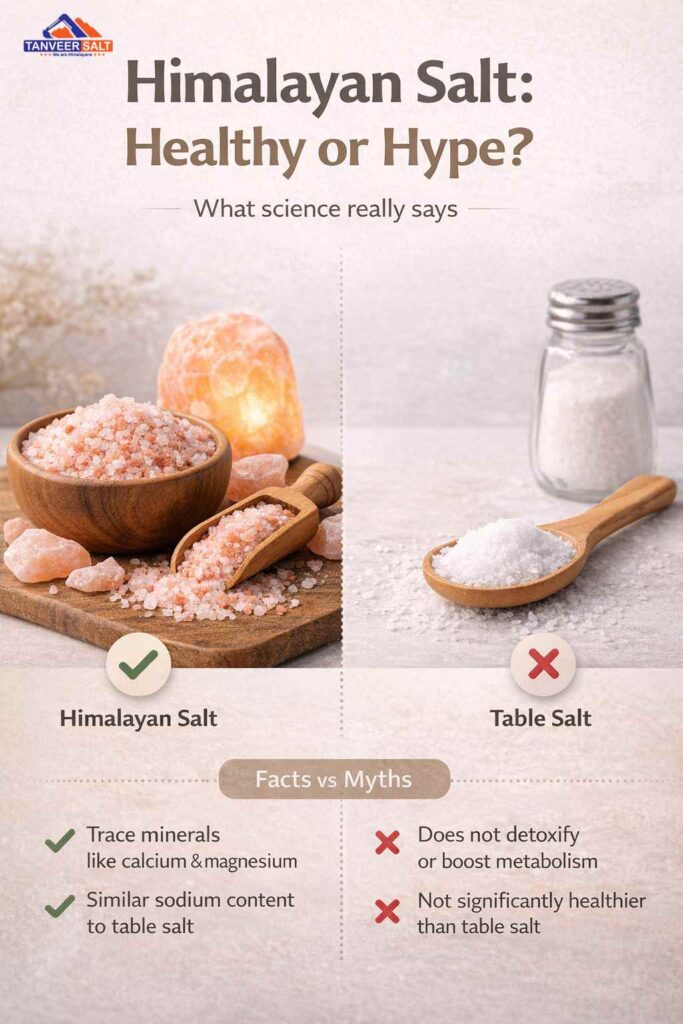
Himalayan salt is not significantly healthier than regular table salt. Both contain sodium, so the amount you consume matters more than the type of salt.
Himalayan salt is less processed and contains small amounts of trace minerals, while regular table salt is often iodized. Overall, neither is clearly healthier; moderation and adequate iodine intake are more important.
Is Himalayan Salt Better Than Sea Salt?
Himalayan salt is not significantly healthier than sea salt. Both are mainly sodium chloride and provide sodium. Their color, texture, mineral content, and processing can differ, but neither is clearly better for health. The best choice depends on taste, cooking needs, and whether you need an iodized salt.
Himalayan Salt Health Claims: What’s True and What’s Hype?
Claim | What the evidence says |
Himalayan salt detoxifies the body | There is no good evidence that it detoxifies the body |
Himalayan salt helps with weight loss | There is no good evidence that it directly causes weight loss |
Himalayan salt is better for blood pressure | No. It still contains sodium, and too much sodium can raise blood pressure. |
Himalayan salt provides important minerals | It contains trace minerals, but generally not enough to provide significant nutritional benefits. |
Himalayan salt is much healthier because it is natural | Being natural or less processed does not make it significantly healthier than other salt. |
How to Use Himalayan Salt
Himalayan salt can be used like other culinary salts to season vegetables, meats, soups, sauces, and other dishes. Fine-grain salt works well for everyday cooking, while coarse grains can be used as a finishing salt. Because it still contains sodium, use it in moderation.
FAQ
What is the healthiest salt to have?
There is no single healthiest salt for everyone. The most important factor is limiting overall sodium intake. Iodized salt can also help provide iodine when used appropriately.
What are the disadvantages of Himalayan salt?
Himalayan salt is high in sodium and is generally not iodized. Its trace minerals are present in very small amounts, so they do not provide significant nutritional benefits.
Is it okay to eat Himalayan salt every day?
Yes, Himalayan salt can be used every day in moderation. What matters most is your total daily sodium intake and getting enough iodine from your diet.
Is Himalayan salt better for you than regular salt?
No. Himalayan salt is not significantly healthier than regular table salt. Both provide sodium, although regular salt is often iodized.
One Response