
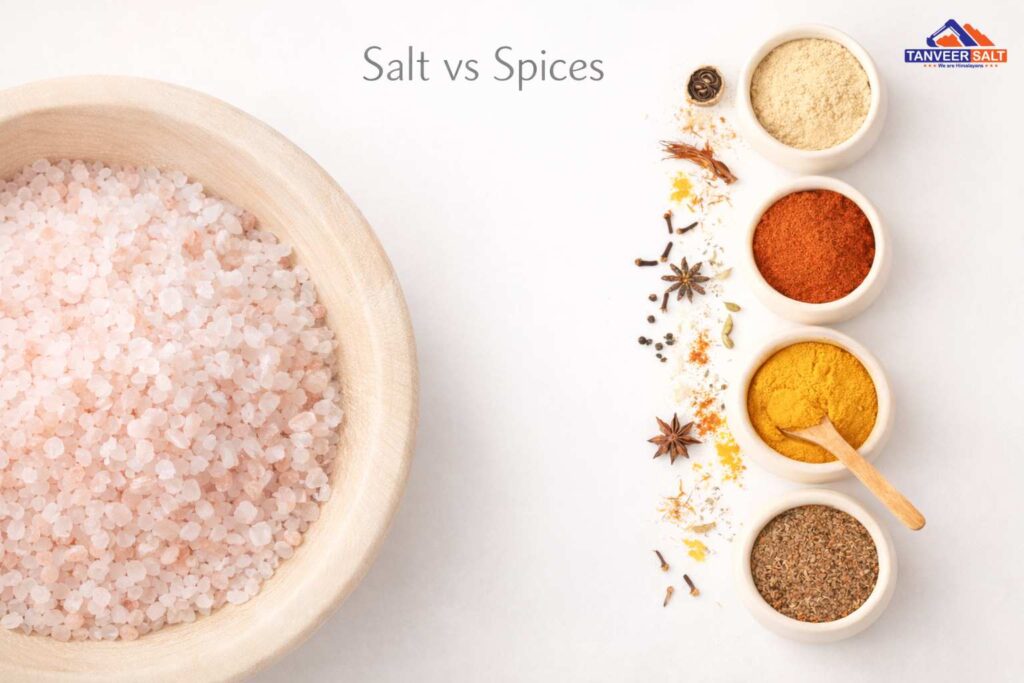
Is Salt a Spice? Difference Between Salt, Spices, Herbs & Seasonings
Is salt a spice? The simple and correct answer is no. Salt is not spicy, and it is not spice. Salt is a mineral, while spices come from plants. This key difference matters in food classification. Although salt is often used with spices in cooking, it belongs to a separate category. Many people ask if salt is considered a spice because it plays a major role in flavoring food. However, how something is used does not define what it is. Understanding the difference between salt, spices, herbs, seasonings, and condiments helps clear common confusion in everyday cooking and food terminology.
Quick Answer – Is Salt Considered a Spice?
No, salt is not considered a spice. Salt is a mineral, while spices are plant-based ingredients. This clear distinction answers the question directly and removes confusion. Many people wonder, is salt a spice, because both are used to seasonal food. Salt and spices are also often stored together in kitchens and grocery stores. From a definition standpoint, a spice must come from a plant. Spices are made from roots, seeds, bark, or fruits. Salt, however, comes from the earth or the sea. It is mined or evaporated from seawater. Because salt does not come from a plant, it does not meet the basic definition of a spice. Even though salt plays a major role in flavoring food, usage does not determine classification. This is why salt is not a spice, even when it is used alongside spices in everyday cooking.
What Is Salt?
Salt is a naturally occurring mineral made mainly of sodium chloride. When people ask, what is salt, the scientific answer is simple. Salt is an inorganic compound found in nature. It is not a plant product. Salt is obtained by mining underground salt deposits or by evaporating seawater. Common varieties include sea salt, table salt, and Himalayan pink salt. All these types come from mineral sources. None of them are harvested from plants. This is why the belief that salt is a spice is a common myth. Spices must come from plants, such as seeds, bark, roots, or fruits. Salts do not grow. It does not come from leaves or seeds. Because of this, salt does not qualify as a spice under any culinary or scientific definition.
What Is Spice?
A spice is a plant-based ingredient used to add flavor, aroma, or color to food. According to the spice definition, spices come from non-leafy parts of plants. This basic rule helps explain what qualifies as a spice. Spices are obtained from seeds, bark, roots, fruits, or flower buds. Common examples include cinnamon from bark and black pepper from dried fruit. Cloves come from flower buds, while turmeric comes from roots. Each example fits the same definition. All spices share one key characteristic. They come from plants. This plant-based origin is what clearly separates spices from salt. Since salt does not come from a plant, it does not meet the spice’s definition and cannot be classified as a spice.
What Is an Herb?
An herb is a plant-based ingredient that comes from the leafy parts of plants. This is the key point in the herbs vs spices comparison. The main difference depends on which part of the plant is used. Herbs come from leaves, while spices come from other plant parts. Herbs can be used fresh or dried. Both forms are common in cooking. Fresh herbs provide a light, bright, and aromatic flavor. Dried herbs offer a stronger and more concentrated taste. Basil, thyme, parsley, and oregano are well-known examples of herbs. Because herbs come from plant leaves, salt cannot be classified as an herb. Salt does not come from a plant and does not fit the herb definition.

Difference Between Salt, Spices, and Herbs
The difference between spices and herbs becomes clear when origin and purpose are considered. Salt is a mineral obtained from the earth or the sea. It is mainly used to enhance basic taste. It does not add aroma in the same way plants do. Spices come from plant parts such as seeds, bark, roots, or fruits. They add warmth, aroma, and complexity to food. Herbs come from plant leaves and provide freshness and mild flavor. This clear plant origin defines both categories. When comparing herb vs spice vs seasoning, salt stands apart. Salt is not plant-based and does not fit into either group. Although herbs, spices, and salt are often used together in cooking, they belong to different classifications.
Is Salt Seasoning?
Yes, salt is seasoning. Seasoning refers to anything added to food to enhance flavor. Salt performs this role better than almost any other ingredient. It improves taste, balances flavors, and brings out natural flavors in food. Salt is considered a seasoning because it reduces bitterness and enhances overall taste. It works with both herbs and spices while cooking. However, seasoning is a functional term, not a source-based category. It describes how an ingredient is used, not where it comes from. This means salt can be a seasoning without being a spice. In short, salt is a seasoning, but not a spice.
Is Salt a Condiment?
Salt can sometimes be used as a condiment. A condiment is usually added to food after cooking to improve taste. When salt is sprinkled on food at the table, it works as a condiment. This use is common in everyday meals. However, this role depends on how salt is used. Salt is not always a condiment. It only acts like one in certain situations. Most of the time, salt is added while cooking. Even when used as a condiment, salt does not change its identity. Its primary classification remains the same. Salt is mineral and seasoning, not spices or herbs.
Is Salt a Spice or Mineral
Salt is mineral, not spices. This classification is important in food science. Minerals behave very differently from plant-based ingredients. Salt plays a special role that spices cannot replace. Salt affects food preservation and moisture control. It also influences fermentation and food texture. These functions go beyond simple flavor enhancement. Spices mainly contribute aroma and flavor compounds to food. Understanding whether salt is a spice or mineral helps remove confusion. It also explains why salt has a unique role in cooking and food processing. Salt is essential, but it is not a spice.
Common Myths About Salt and Spices
One common myth is that salt is a spice. This is false because salt does not come from plants. Spices must be plant-based, while salt is a mineral found in nature. This misunderstanding is very common in everyday cooking. Another myth is that salt is spicy. Salt does not create heat or a burning sensation. Spiciness comes from compounds like capsaicin, which are found in chili peppers.Himalayan Salt may taste strong because it enhances flavors. However, it does not add heat. Salt improves taste, but it is not spicy, and it is not spice.
Why Salt Is Often Grouped with Spices
Salt is often grouped with spices because of everyday kitchen habits, cultural traditions, and retail placement. Grocery stores usually place salt in the spice aisle, which leads many people to assume it is a spice. At home, salt is commonly stored in spice racks alongside herbs and spices. Cooking practices also add to this confusion. Salt and spices are frequently added during the same stage of cooking to enhance flavor. Because they are used together, people naturally associate salt with spices. However, convenience and tradition do not change scientific classification. Salt does not come from plants like spices do. It is a mineral used mainly to enhance and balance flavor. Therefore, despite common belief, salt is not a spice. Salt remains a seasoning and mineral, not a spice.
FAQs About Salt, Spices, and Seasonings
Are salt and pepper seasonings?
Yes, salt and pepper are seasonings. They are used to enhance flavor and are basic ingredients in everyday cooking.
Is salt and pepper a condiment?
Salt and pepper are not usually classified as condiments. Condiments are foods like ketchup, mustard, or sauces that are added after cooking. Salt and pepper are mainly used during cooking or at the table to enhance flavor, so they are best described as seasonings, not condiments.
Is salt a herb or spice?
Salt is not a herb or a spice. Herbs come from plant leaves, and spices come from seeds, roots, or bark of plants. Salt comes from rocks or sea water, so it is mineral.
What category does salt belong to?
Salt belongs to the mineral category. In cooking, it is also called seasoning because it is used to add flavor to food. Even though it is kept with spices, salt is not a spice or herb.
Is Final Verdict Salt Spice?
Salt is not a spice. Salt is mineral and seasoning, while spices and herbs come from plants. Spices are made from seeds, roots, bark, or fruits, and herbs come from plant leaves. Salt comes from natural sources like rock deposits and sea water. Salt is often used with spices while cooking, which causes confusion. Many people think salt is a spice because it is added at the same time. However, usage does not change classification. Understanding this difference helps clear common myths about food. It also builds accurate food knowledge. Salt enhances flavor and balances taste, but it does not belong to the spice family.