
Does Himalayan Salt Have Electrolytes? Benefits, Minerals & Hydration Facts
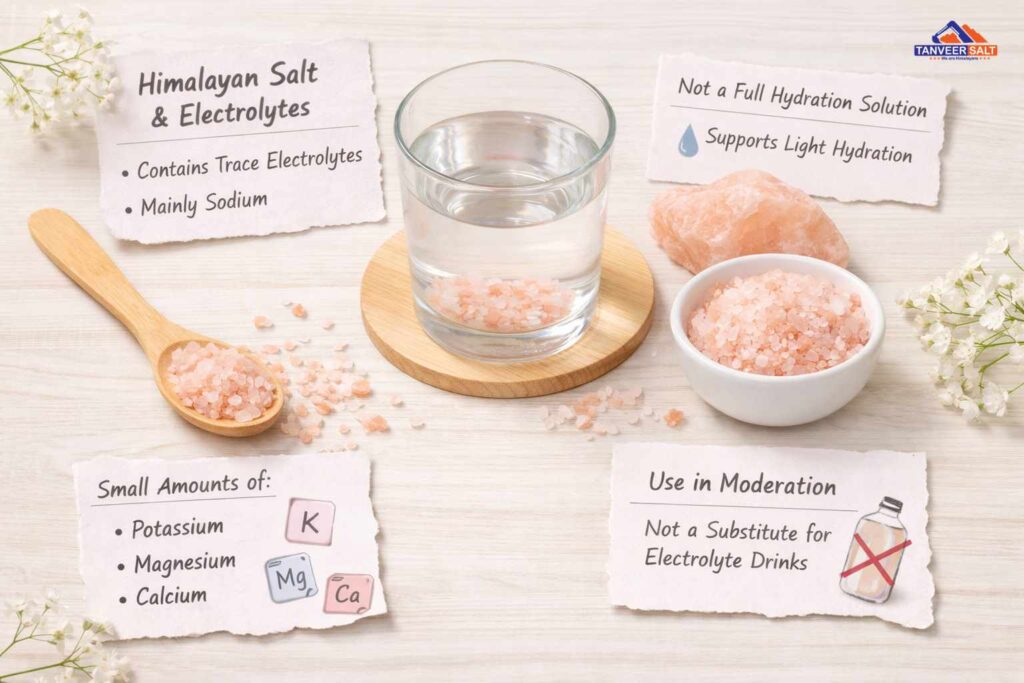
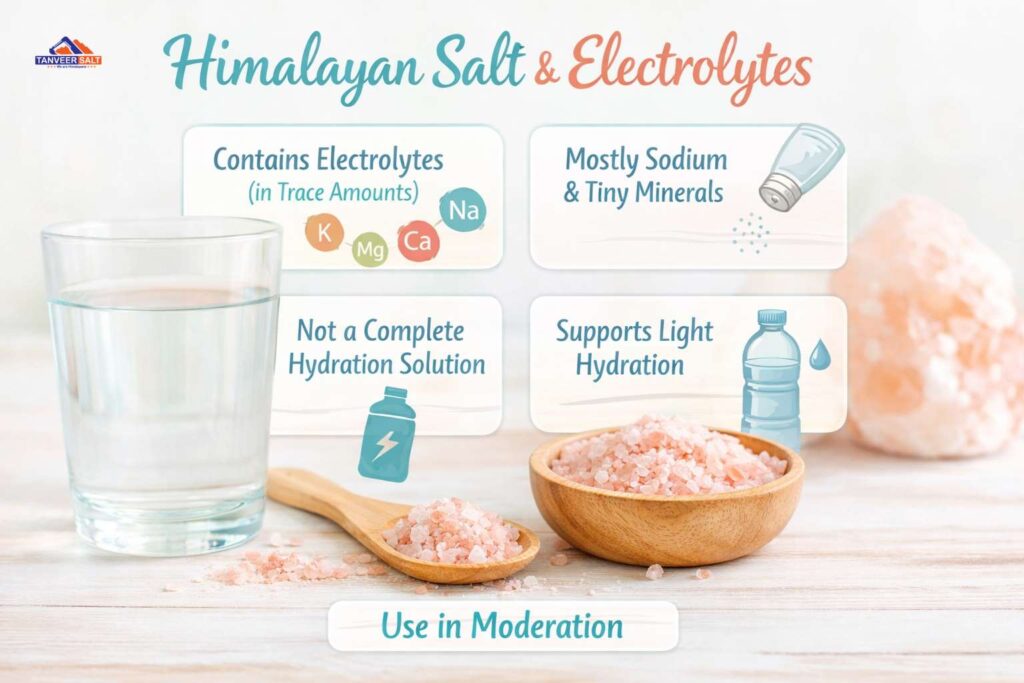
Yes, Himalayan salt does have electrolytes, but only in very small amounts. It mainly contains sodium, with tiny traces of potassium, magnesium, and calcium. It does provide electrolytes, but it is not a complete electrolyte solution and should not be used for full hydration support. So, does Himalayan salt have electrolytes? Yes, but the amount is too low to properly support real hydration needs.
Quick Answer – Does Himalayan Salt Have Electrolytes?
Himalayan salt contains electrolytes, and the same is true for pink Himalayan salt. So, if you are wondering if pink Himalayan salt has electrolytes, the answer is yes. However, electrolytes exist only in trace amounts. This means Himalayan salt can support hydration in a very mild way, but it does not work like sports drinks, oral rehydration solutions, or medical electrolyte formulas. It provides a small mineral boost, not full electrolyte balance.
What Are Electrolytes and Why Are They Important?
Your body contains minerals called electrolytes that are charged with electricity. By promoting hydration, muscle contraction, nerve signals, heart rhythm, and fluid balance, they aid in the proper operation of your body. The primary electrolytes are calcium, magnesium, potassium, and sodium. Because sodium helps your body retain water and maintain fluid balance, it is particularly crucial for staying hydrated. For this reason, salt including Himalayan salt is frequently mixed with water to keep people hydrated.
Is Himalayan Salt an Electrolyte?
Although it contains some electrolytes, Himalayan salt is not an electrolyte in and of itself. This is a significant distinction. The term “contains electrolytes” refers to the presence of minerals such as potassium or sodium. A drink or formula with balanced minerals for hydration is typically what we mean when we say something “is an electrolyte.” The primary mineral found in Himalayan salt is sodium, with trace amounts of other minerals. It is not intended to be a complete hydration product, but it can aid somewhat with electrolytes.
What Electrolytes Does Himalayan Salt Contain?
The primary electrolyte in Himalayan edible salt is sodium. Additionally, it contains trace amounts of calcium, magnesium, and potassium. Because these minerals are so small, they don’t actually aid in the body’s electrolyte replacement. Therefore, the electrolytes in Himalayan salt are primarily sodium, with trace amounts of other minerals that have little bearing on hydration.
Himalayan Salt vs Sea Salt – Electrolyte Comparison
The nutritional value of sea salt and Himalayan salt is comparable. The primary mineral in salt, sodium, is present in high concentrations in both. They also contain trace amounts of other minerals, such as calcium and magnesium, but these are insignificant. Hydration is not enhanced by the minor mineral differences between sea salt and Himalayan salt. As a result, neither salt can serve as an appropriate electrolyte substitute. They shouldn’t be used in the place of water or other hydrating beverages.
Himalayan Salt in Water for Hydration
To stay hydrated, many people mix Himalayan salt with water. The salt sodium can aid in the body’s absorption and retention of fluids. A small amount of salt in water may be somewhat helpful for mild conditions like light sweating, hot weather, or brief workouts. However, Himalayan salt water doesn’t provide all the electrolytes your body requires. It is not a replacement for appropriate electrolyte drinks, sports drinks, or medical re hydration solutions, but it can help with hydration a little.
Benefits of Himalayan Salt Water (Evidence-Based)
The benefits of Himalayan salt water are minimal. It can provide a small amount of sodium, aid in light hydration, and help your body absorb water. However, there is no evidence that it provides specific minerals, treats illnesses, or detoxifies the body. It’s not a health or wellness treatment; it’s just a straightforward method of promoting hydration.
How Much Himalayan Salt to Add Water?
It is generally safe for most people to add only a pinch of salt per liter of water. Overindulging in salty water can increase the body’s sodium levels, which can cause issues like edema, dehydration, or increased cardiac strain. People who are on low-sodium diets, have high blood pressure, kidney disease, or heart issues should stay away from salt water because their bodies might not be able to handle the additional sodium. To put it briefly, a small amount of salt can help with hydration, but an excessive amount can be detrimental rather than beneficial.
Sole Water Explained – Is It Safe?
It is generally safe for most people to add only a pinch of salt per liter of water. Overindulging in salty water can increase the body’s sodium levels, which can cause issues like edema, dehydration, or increased cardiac strain. People who are on low-sodium diets, have high blood pressure, kidney disease, or heart issues should stay away from salt water because their bodies might not be able to handle the additional sodium. To put it briefly, a small amount of salt can help with hydration, but an excessive amount can be detrimental rather than beneficial.
Is Himalayan Salt Good for Hydration?
Because it contains some sodium, Himalayan salt can somewhat aid with hydration, but it is not a complete solution. It works best for mild dehydration, brief workouts, and light perspiration. Electrolyte drinks, oral re hydration solutions, and sports drinks designed for intense exercise and perspiration cannot be substituted.
When Is the Best Time to Drink Himalayan Salt Water?
To replenish some of the sodium lost through perspiration, some people drink Himalayan salt water in the morning or after mild exercise. It should not be taken in large quantities on a daily basis, nor should it be used at night. Unless a doctor gives the all-clear, people with high blood pressure or other health issues should stay away from it.
FAQs About Himalayan Salt & Electrolytes
Q1: Are electrolytes present in Himalayan salt?
Electrolytes are present in Himalayan salt, but only in trace amounts. With trace amounts of potassium, magnesium, and calcium, sodium is its primary mineral.
Q2: Can electrolyte drinks be substituted with Himalayan salt?
Not at all. Himalayan salt is not a full source of electrolytes. It cannot take the place of appropriate hydration beverages made especially to replenish electrolytes.
Q3: Does Himalayan salt make you feel more hydrated?
It is not a medical hydration solution and shouldn’t be relied upon for significant fluid replacement, but it can help a little with light hydration if used in moderation.
Final Verdict – Does Himalayan Salt Have Electrolytes?
Electrolytes are present in Himalayan salt, but in very small quantities. Sodium makes up most of it, with trace amounts of other minerals. It should not be used in place of appropriate hydration drinks because it is not a complete source of electrolytes. It is not a medical hydration solution, though it may be somewhat helpful for light hydration if taken in moderation. To put it simply, Himalayan salt contains some electrolytes, but it is not an electrolyte drink and needs to be used with caution.