
Kosher Salt vs Himalayan Salt: Key Differences, Uses, Taste & Health Benefits
Salt is one of the most important and basic ingredients in cooking. Among the many salt choices, Kosher salt vs Himalayan salt is a common comparison for home cooks and chefs. Both salts are popular, but they are not the same and cannot be used in a similar way. The quick answer is simple: kosher salt is best for cooking and baking, while Himalayan pink salt is often used for finishing, presentation, and wellness purposes. They are different in taste, texture, mineral content, and health perception. By understanding these major differences, it would be easier for you to choose the right salt for you.
What Is Kosher Salt?
Kosher salt is basically a coarse-grained salt commonly used in cooking. It is called kosher salt because it has traditionally been used during the koshering process, where salt helps draw out blood from meat as part of Jewish food laws. The salt itself is not always religiously certified unless labeled as such.
Texture and Grain Size
Kosher salt has big, flaky crystals instead of fine grains. These flakes are easy to pinch and sprinkle by hand. They spread evenly across food and dissolve quickly when heated. This helps cook season dishes more accurately while cooking.
Common Brands
Popular brands include:
- Diamond Crystal
- Morton
These brands are slightly different in crystal size; therefore, measurements can vary.
How Kosher Salt Is Used in Cooking
Kosher salt is considered the top choice of professional chefs because it offers better control, consistency, and flavor balance in everyday cooking. It is commonly used for seasoning meat because its coarse flakes stick to the surface, help in removing excess moisture, and improve both texture and flavor. While cooking vegetables, chefs also referrer kosher salt because it can evenly distribute and help in enhancing natural flavors without overpowering them. Moreover, baking recipes that require precise control, kosher salt’s larger crystals help measure accurately and adjust seasoning with confidence.
What Is a Himalayan Salt?
Himalayan salt is a natural pink rock salt mined from khewra mine salt located in the Punjab region of Pakistan, near Himalayas. known for its minerals and coarse crystals. Known for its distinctive pink color, it gets this hue from trace minerals like iron, magnesium, and potassium. Unlike regular table salt, Himalayan salt is often less processed and free from additives, making it popular for cooking, seasoning, and even decorative purposes.
Why Is Himalayan Salt Pink?
Himalayan salt is pink because it has small amounts of minerals like iron, potassium, calcium, and magnesium. The iron gives it the pink hue, while the other minerals add tiny traces of color and flavor. These minerals are natural and make the salt look different from regular white table salt.
Mineral Content Overview
Although Himalayan salt contains minerals like potassium, magnesium, and calcium, they are present in very small amounts. Nutritionally, it is still mostly sodium chloride, so it should be used in moderation just like regular salt. These trace minerals give it a slight difference in taste and color, but they don’t provide significant health benefits on their own.
Himalayan Salt vs Regular Salt
Because Himalayan edible salt is less processed and entirely natural, it differs from regular table salt. Its original trace minerals are still present, giving it a distinctive hue and delicate flavor. It typically doesn’t have iodine added, in contrast to ordinary salt. It is perfect for seasoning, grilling, and finishing foods because of its larger, coarser, and more textured crystals. The rough texture gives food a nice crunch. Additionally, a lot of people like it because it feels more genuine. Furthermore, Himalayan salt is frequently used for aesthetic and health reasons in addition to cooking. It is a popular option for people who appreciate both taste and quality in their ingredients due to their unique appearance and natural composition.
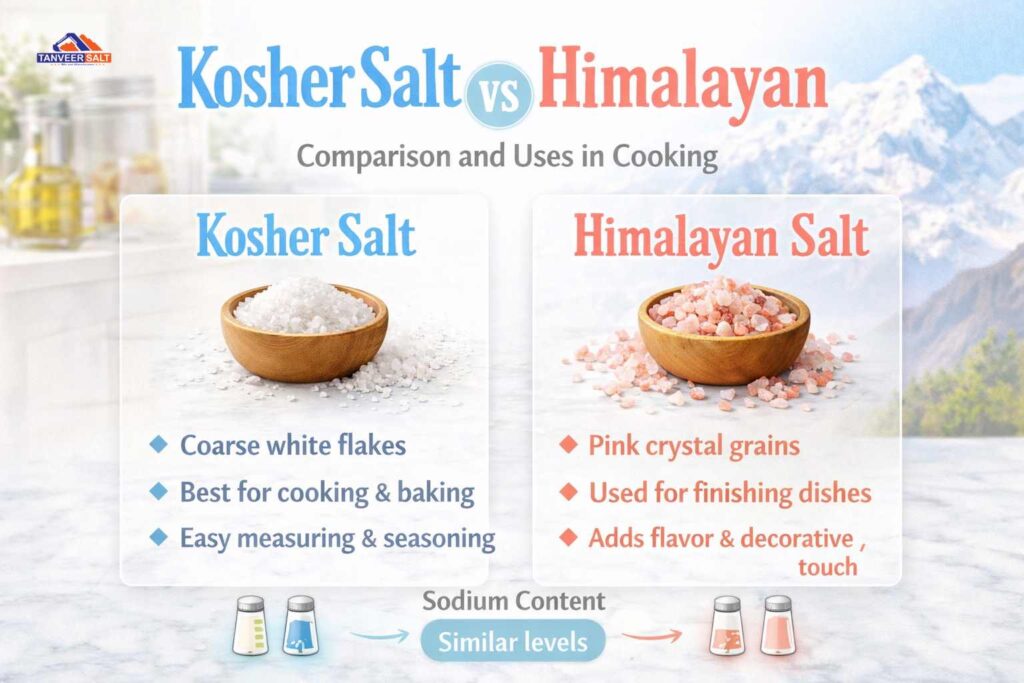
Kosher Salt vs Himalayan Salt – Quick Comparison Table
| Feature | Kosher Salt | Himalayan Salt |
| Color | White | Pink |
| Texture | Coarse flakes | Crystals |
| Sodium content | High | Slightly lower (by volume) |
| Minerals | Minimal | Trace minerals |
| Best use | Cooking & baking | Finishing & wellness |
Taste & Texture Differences
Does Himalayan Salt Taste Different?
The answer is only slightly. Pink salt has a mild and gentle flavor. The difference is very subtle. Most people cannot notice it at all. In cooked food, the taste is almost the same as regular salt. The change is small and does not strongly affect flavor.
Kosher Salt Texture
Kosher salt dissolves faster than many other salts. Its larger, flaky grains spread out more evenly. This helps the salt mix well with food. Because of this, it is easier to control the seasoning. You can add flavor slowly and avoid over-salting.
Flavor Impact
For cooking, kosher salt delivers consistent flavor. It mixes well into food and seasons evenly. This makes it reliable for everyday cooking. Himalayan salt is better appreciated when sprinkled on finished dishes. Its light taste and color stand out more at the end. This way, you can notice it without changing the dish too much.
Cooking Uses – Which Salt Is Better?
Kosher Salt for Cooking & Baking
For regular cooking, kosher salt works best. It’s a great way to season meats and steaks. It works well for evenly roasting vegetables. Its grain size aids in precise baking. It is used in a lot of professional kitchens. Because it provides accuracy and dependability, chefs favor it. Using Himalayan Salt in Cooking The best salt to use as a finishing salt is Himalayan salt. It is frequently used as salt for grinders. As a decorative seasoning, it also enhances aesthetic appeal. The size of the crystal can vary greatly. It is therefore not perfect for baking.
Can You Substitute Himalayan Salt for Kosher Salt?
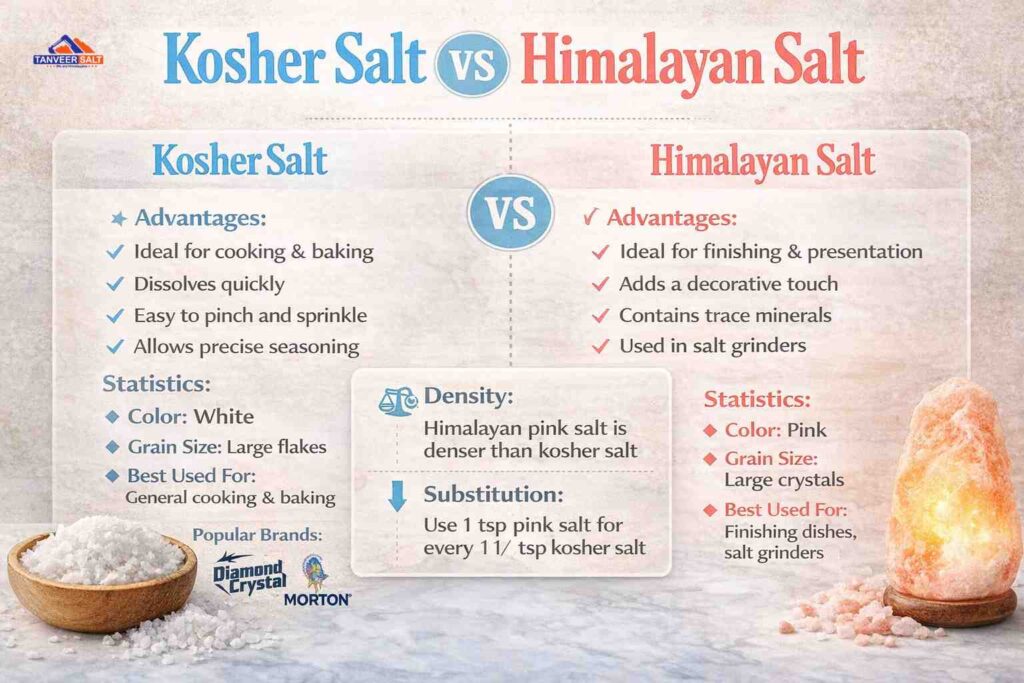
Yes, but with caution. Himalayan salt and kosher salt are not the same in size or density. Using them the same way can change the flavor.
Conversion Ratio
Himalayan salt crystals are denser than kosher salt. This means they contain more salt in the same amount. You should use less Himalayan salt when substituting. Start with a smaller amount and adjust slowly.
When Substitution Works
Substitution works well for sprinkling on food. It is fine for light seasoning. Small amounts are easier to control.
When It Doesn’t
It does not work well for baking. It is also not good for recipes requiring exact salt measurements.
Sodium & Health Comparison
Sodium Content
Both salts are mostly sodium chloride. This means they affect the body in a similar way. Himalayan salt has slightly lower sodium by volume. This is because of its crystal size. However, the difference is minimal and not very noticeable.
Is Himalayan Salt Healthier?
This is mostly a myth. Himalayan salt contains trace minerals. The amount is very small. They do not significantly impact health.
Is Kosher Salt Healthy?
Kosher salt is safe when used in moderation. It works the same as other salts in the body. Like any other salt, too much can be unhealthy.
Is Himalayan Salt Kosher?
Religious vs Culinary Meaning
“Kosher salt” refers to usage, not certification.
Certification Explanation
Himalayan salt can be kosher only if certified by an authority.
Is Pink Himalayan Salt Kosher Certified?
Some brands are certified; many are not. Always check labels.
Kosher Salt vs Himalayan Salt vs Sea Salt
Kosher salt is best for cooking. It dissolves well and seasons food evenly. This makes it a favorite in everyday and professional kitchens.
Himalayan salt is best for finishing. It is often sprinkled on food after cooking. Its light flavor and color stand out more at the end.
Sea salt varies by source and texture. Some types are fine, while others are coarse. The taste and use depend on where it comes from.
Each salt serves a different purpose. Choosing the right one depends on how you plan to use it.
Pros and Cons of Each Salt
Kosher Salt
Pros
Kosher salt is easy to control while cooking. The grain size makes measuring simpler. It is preferred by chefs in many kitchens. It is also ideal for baking because it gives consistent results.
Cons
Kosher salt has no added minerals. It is usually non-iodized. This means it does not provide iodine unless it is added from other foods.
Himalayan Salt
Pros
Himalayan salt has a natural appearance. Its pink color looks attractive to the food. It contains trace minerals. It also adds decorative appeal when used as a finishing salt.
Cons
Himalayan salt has an inconsistent grain size. This makes measuring harder. Because of this, it is not ideal for baking.
Which One Should You Choose?
- Best for cooking: Kosher salt
- Best for health-focused users: Either, in moderation
- Best for everyday use: Kosher salt with optional finishing salt
Frequently Asked Questions (FAQ)
Is kosher salt the same as Himalayan salt?
No. They differ in texture, use, and mineral content.
Is pink Himalayan salt better than kosher salt?
Not for cooking accuracy. It is better to finish.
Can I use pink salt instead of kosher salt?
Yes, but adjust the quantity.
Does Himalayan salt contain iodine?
No, unless fortified.
Which salt do chefs prefer?
Most chefs prefer kosher salt.
Conclusion
When comparing kosher salt vs Himalayan salt, the right choice depends on how you use salt. Kosher salt is ideal for cooking and baking. Himalayan salt shines as a finishing and decorative salt. Neither is dramatically healthier than the other. Quality, moderation, and correct usage matter most.