
Himalayan Salt vs Sea Salt: Differences, Taste, Benefits & Which Is Better?
Introduction
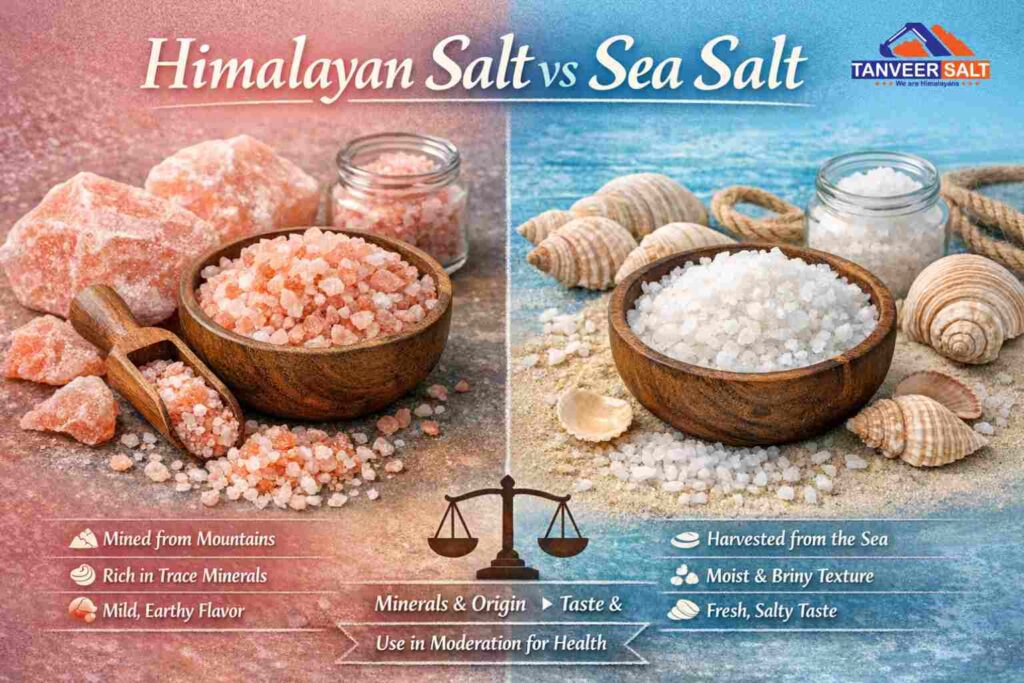
Himalayan salt and sea salt are both natural salts, but they are not the same. Himalayan pink salt is mined from ancient underground salt deposits in Pakistan, while sea salt is produced by evaporating seawater. They also differ in color, crystal structure, processing, taste and culinary uses. When it comes to health, however, neither is automatically better the amount of sodium you consume matters more than whether your salt comes from a mine or the sea. In this guide, we compare Himalayan salt vs sea salt so you can understand which option is better for cooking, taste and everyday use.
What Is Himalayan Salt?
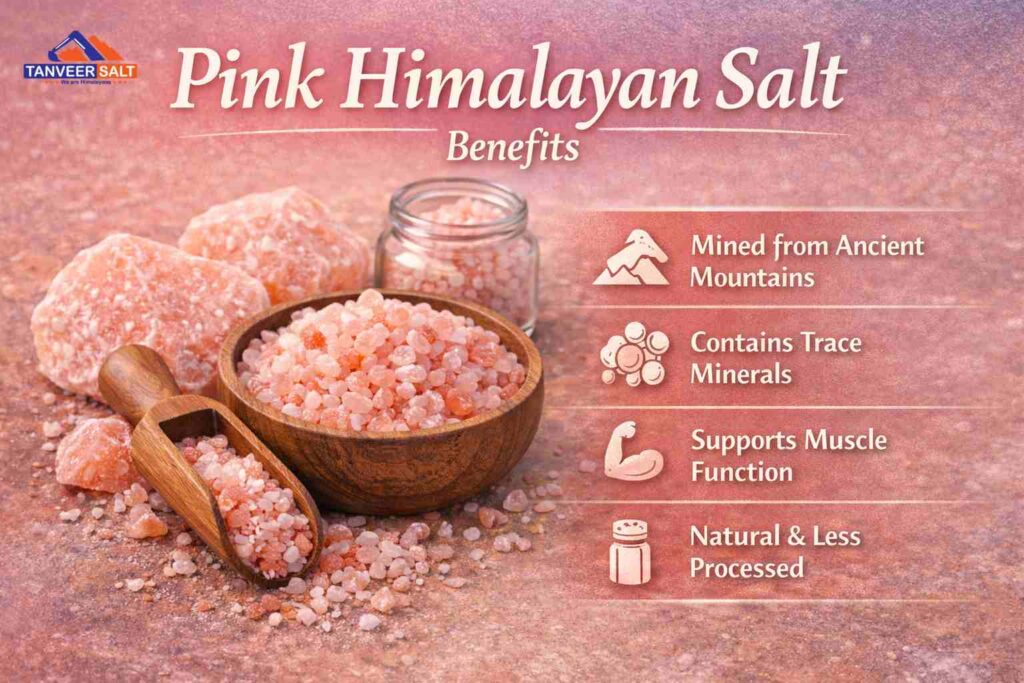
Himalayan salt, also known as Himalayan rock salt, comes from ancient underground salt deposits in Pakistan’s Salt Range. It formed millions of years ago when prehistoric seas evaporated. It is mined as rock salt, then cleaned, crushed, and minimally processed. Its pink color comes mainly from trace minerals, including iron oxide.
What Is Sea Salt?
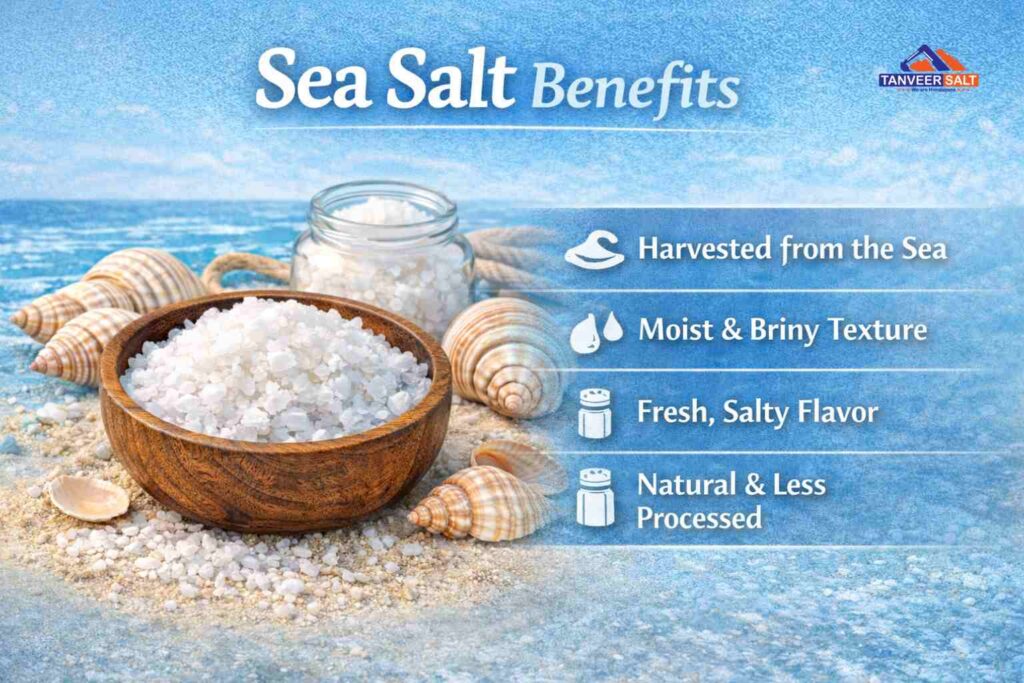
Sea salt is a natural type of salt that comes from ocean water and seawater. Many people ask what sea salt is, and the answer is simple. Sea salt is made by drying seawater. This process is called evaporation. The water slowly disappears because of sunlight or heat, and the salt is left behind. This explains how salt is made in a natural way. Sea salt comes from different oceans and seas around the world. Some well-known types include Mediterranean Sea salt, Celtic Sea salt, and Dead Sea salt. Sea salt usually has a clean, salty taste and can have different textures, from fine to flaky. Because it is less processed than table salt, many people like to use sea salt everyday cooking and seasoning food.
Himalayan Salt vs Sea Salt – Key Differences
The main difference between Himalayan salt and sea salt is their source. Himalayan salt is mined from ancient underground rock deposits in Pakistan, while sea salt is made by evaporating seawater. The difference between pink salt and sea salt can also be seen in their color, taste, and texture.
Himalayan Pink Salt vs Sea Salt for Health
Many people think Himalayan salt and sea salt are healthier because they contain trace minerals. However, these minerals are present in very small amounts. Both salts are mainly sodium chloride, just like table salt. Too much sodium can increase blood pressure, so the key is to use any salt in moderation. Neither Himalayan salt nor sea salt is significantly healthier than the other.
Himalayan Salt vs Sea Salt Taste: Which Tastes Better?
Himalayan salt has a mild, clean taste, while sea salt usually has a stronger, sharper flavor. Fine Himalayan salt works well for everyday cooking, while coarse or flaky sea salt is great as a finishing salt.
When comparing Himalayan salt vs sea salt, neither tastes better for everyone. The best choice depends on your preferred flavor, texture, and use.
Himalayan Salt vs Table Salt
The main difference between Himalayan salt vs table salt is how they are processed. Table salt is highly refined and usually contains added iodine and anti-caking agents, while Himalayan salt is mined from rock salt deposits and is minimally processed.
Himalayan salt has larger, uneven crystals and a mild flavor, while table salt has small, uniform grains and a sharper salty taste. Himalayan salt contains trace minerals, but not enough to make it significantly healthier. Iodized table salt can also be an important source of iodine. Both are safe to use in moderation.
FAQs:
Who should not use Himalayan salt?
People who need to avoid sodium, such as those advised by a doctor to follow a low-sodium diet, should not use Himalayan salt. It still contains sodium like other salts.
Is pink Himalayan salt the same as sea salt?
No, pink Himalayan salt and sea salt are different. They vary in origin, processing methods, mineral traces, and appearance, even though both are natural salts.
Which salt has more minerals?
Himalayan salt contains slightly more trace minerals like iron and magnesium, but the amounts are very small and do not offer meaningful nutritional benefits.
Can I replace sea salt with pink Himalayan salt?
Yes. Pink Himalayan salt can replace sea salt in most recipes. The main difference is the taste, color, and texture.
What is the healthiest salt to consume daily?
There is no single healthiest salt. Himalayan salt, sea salt, and table salt all contain sodium, so the key is using any salt in moderation.
Conclusion
The primary distinctions between Himalayan salt and sea salt are their origins, production methods, taste, texture, and appearance. Himalayan salt is derived from old rocks. It’s pink and has a mild flavor. Sea salt is derived from dried seawater. It tastes fresh and can be used for a variety of purposes. Knowing the differences allows you to use salt more effectively in cooking and in everyday life. Using too much salt, regardless of the type, is not recommended. The most important thing is to use salt moderately.