

Is Salt Water Good for Your Skin? Benefits, Risks & Expert Guide [2026]
After a beach vacation, if you’ve noticed that your skin looks smoother, clearer, or more glowing, you’ve probably wondered if salt water is good for your skin. For good reason, this is one of the most frequently asked questions about skincare. Traditional and medical skin treatments have long included the use of ocean water, sea salt baths, and even washing your face with salt water. Strong natural minerals found in saltwater could support, calm, and cleanse the skin barrier. However, if used improperly, it can also result in dryness or irritation. So, is salt water good for your skin, or can it harm your face? The benefits of saltwater for skin, the science underlying the benefits of sea salt for skin, and when your skin could be harmed by pink salt water. You’ll discover how to apply salt water to your face safely, whether it helps manage different skin concerns, including acne and eczema, and how ocean water differs from saltwater pools and homemade saltwater remedies.
What Makes Saltwater Beneficial for Skin?
Saltwater skincare benefits come from its rich mineral content. Salt water, especially ocean or sea water, contains important minerals. These include magnesium, potassium, calcium, and sodium chloride. It also has trace minerals like zinc and bromide. These minerals help keep the skin healthy. Magnesium supports skin repair and reduces inflammation. It also helps strengthen the skin barrier. Potassium helps control hydration and moisture balance. Calcium supports skin cell turnover and renewal. Sodium chloride gives salt water natural cleansing and antimicrobial properties. These minerals explain what saltwater does to your skin.Himalayan salt water has antimicrobial properties that help reduce bacteria on the skin’s surface. This is why salt water for acne is so popular. Bulk Himalayan Salt water also has anti-inflammatory effects. It can calm irritated skin conditions. It helps regulate oil production and can temporarily tighten pores. This improves overall skin texture.
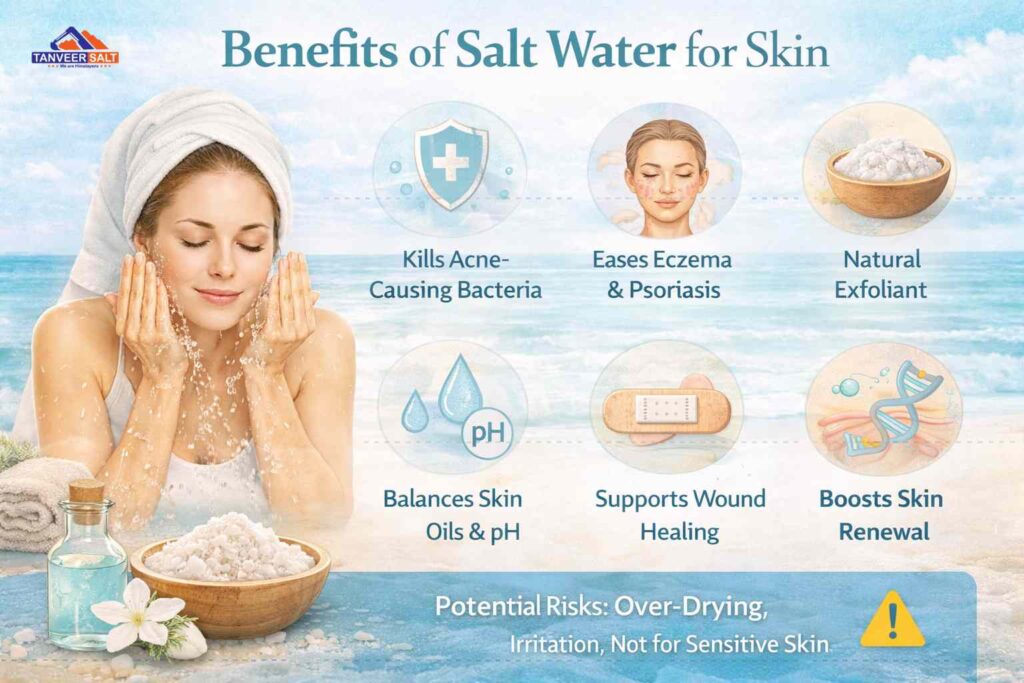
7 Science-Backed Benefits of Salt Water for Your Skin
Natural Antimicrobial Properties
One of the most well-known benefits of salt water for skin is its ability to kill bacteria. Salt water creates an environment where many bacteria cannot survive, which helps reduce skin infections and breakouts. Research shows that saline solutions are effective at cleansing wounds and reducing microbial growth, supporting the idea that saltwater kills bacteria on skin.
Helps Reduce Acne and Breakouts
Many people ask, is salt water good for acne? The answer is yes when used correctly. Saltwater helps dry excess oil, reduce inflammation, and limit acne-causing bacteria. Studies suggest that mineral-rich sea water may help reduce acne severity by calming inflammation and improving skin balance. However, overuse can worsen dryness and trigger more oil production.
Soothes Eczema and Psoriasis
Saltwater therapy is widely used for eczema and psoriasis, especially in Dead Sea treatments. Research shows that Dead Sea salt for skin can significantly reduce redness, itching, and scaling. The magnesium content improves hydration and reduces inflammation, making salt water good for eczema and saltwater psoriasis when properly diluted.
Natural Exfoliation
Salt water provides gentle exfoliation by loosening dead skin cells. This improves skin texture and brightness without harsh scrubs. Unlike mechanical defoliants, saltwater exfoliation is subtle and works best when followed by moisturizer.
Promotes Wound Healing
Saltwater healing properties have been used for centuries. Mild saltwater solutions can help cleanse minor cuts and promote healing by reducing bacteria and inflammation. However, salt water should not be used on deep or open wounds without medical guidance.
Balances Skin pH
Healthy skin has a slightly acidic pH. Salt water can help restore balance, especially for oily or acne-prone skin. By supporting the skin barrier, salt water improves moisture retention and oil control.
Anti-Aging Properties
Minerals in saltwater support skin renewal and may help protect against environmental damage. Magnesium improves skin elasticity, while trace minerals provide antioxidant effects that support collagen function and reduce visible signs of aging over time.
Ocean Water vs. Saltwater Pool vs. Homemade Salt Water
Ocean water is often considered the gold standard because it contains a full spectrum of natural minerals. Is ocean salt water good for your skin? Yes, but pollution, bacteria, and sun exposure are important considerations. Saltwater pools use salt to generate chlorine, making them gentler than traditional pools but still potentially dry. While saltwater pools are better than chlorine-only pools, they don’t provide the same mineral benefits as ocean water. Homemade salt water for skin allows for control and safety. Using sea salt, Himalayan rock salt, or Dead Sea salt (not table salt) ensures better mineral content. DIY solutions are ideal for facial use when properly diluted.
How to Use Salt Water on Your Face Safely
Washing your face with salt water can be beneficial when done correctly. A simple DIY saltwater face wash uses lukewarm water and a small amount of sea salt. Mix ½ teaspoon of sea salt into one cup of warm distilled water. Gently splash onto clean skin or apply with a cotton pad. Do not scrub. Rinse after 30–60 seconds and moisturize immediately. Saltwater toner sprays and compresses for acne are also effective. Most people should not wash their face with salt water every day. Two to three times per week is ideal, depending on skin type.
Potential Risks and Side Effects
Despite the benefits, salt water can cause side effects. Many people ask, does saltwater dry out your skin? Yes, overuse can strip natural oils and disrupt the skin barrier. Sensitive skin may experience irritation, redness, or stinging. Over-exfoliation is another risk, especially when combined with sun exposure. Salt water should be avoided on sunburned or severely broken skin.
Salt Water for Specific Skin Conditions
For acne-prone skin, saltwater helps control oil and bacteria but should be followed by a non-comedogenic moisturizer. For eczema, diluted saltwater baths or compresses can reduce itching, but concentration must be low to avoid flares. For psoriasis, Dead Sea salt therapy shows the strongest evidence, especially when combined with UVB exposure under medical supervision. For rosacea and very sensitive skin, Himalayan salt water is usually not recommended due to irritation risk.
Expert Tips and Best Practices
Always moisturize after using salt water to prevent dryness. Use lukewarm water, never hot. Patch test before full application. Choose mineral-rich salts like sea salt or Dead Sea salt instead of table salt. Sun protection is essential, as salt water can increase sun sensitivity. If you have a chronic skin condition, consult a dermatologist before starting saltwater therapy.
FAQs
Does salt make your skin glow?
No, salt does not naturally make your skin glow; instead, its abrasive texture and high sodium content can dehydrate and strip the skin barrier, leading to dryness and irritation. While an occasional sea salt scrub can offer temporary exfoliation, overusing it causes dullness, redness, and inflammation rather than a healthy glow.
Can I apply salt water on my face daily?
Applying salt water to your face daily is generally not recommended, as it can strip away your skin’s natural oils, weaken the skin barrier, and lead to dryness, irritation, or breakouts. While it has mild antibacterial and exfoliating properties, it is safer to use it only once or twice a week or stick to gentle, formulated cleansers instead.
What is the salt trick for aging skin?
The viral “salt trick” for aging skin is a DIY method claiming to tighten wrinkles, but dermatologists strongly advise against it. Salt’s harsh, abrasive nature dehydrates the skin and damages its barrier, which actually worsens fine lines and causes irritation.
What does putting salt on your face at night do?
Putting salt on your face at night severely dehydrates the skin, strips its natural moisture barrier, and can cause irritation or micro-tears as you sleep. Dermatologists advise against it because it worsens dryness and inflammation rather than providing any skincare benefits.
Conclusion:
Is salt water good for your skin? Yes, when used the right way and not too often. Salt water can help clean the skin, reduce acne, and control excess oil. It may also calm redness and support skin healing. The benefits of salt water for skin include helping remove bacteria and keeping the skin balanced. However, using too much salt water can dry out the skin and cause irritation. It is important to know your skin type and use the correct salt. If you have sensitive skin or a medical skin condition, it is best to talk to a dermatologist before using salt water regularly.