
Smoked Salt: What It Is, How to Make It & How to Use It
If you have ever wanted that deep smoky BBQ flavour without firing up a grill, smoked salt is your answer. It is one of the simplest and most versatile ingredients you can add to your kitchen and once you try it, you will reach for it constantly.
This guide covers what smoked salt is, how to make it, which salt and wood to use, and every way to use it.
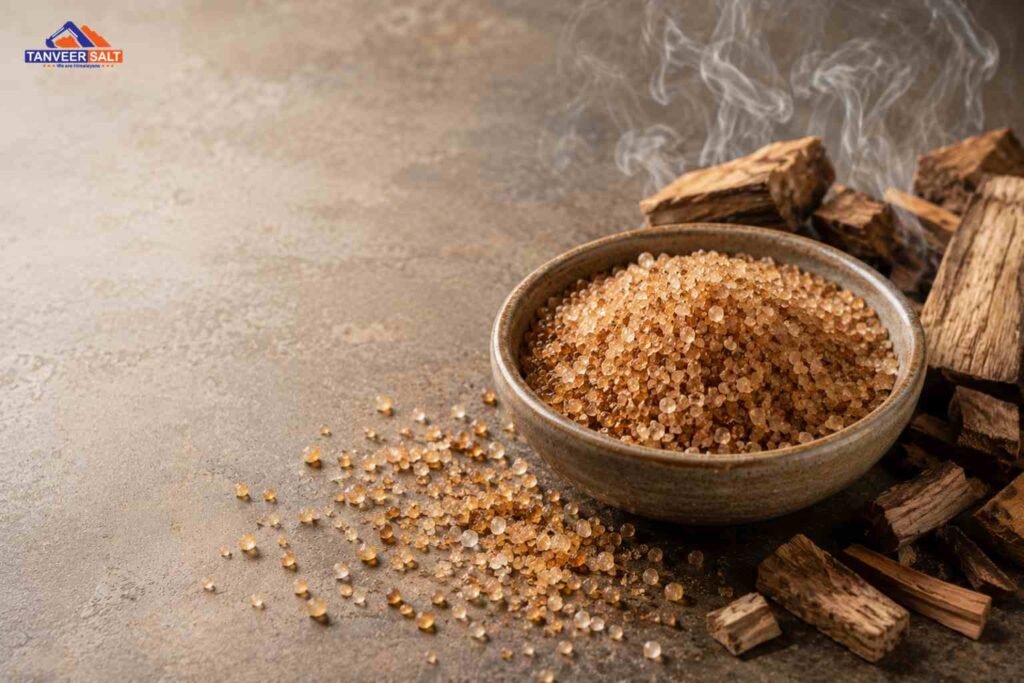
What Is Smoked Salt?
Smoked salt is regular salt, sea salt, kosher salt, or Himalayan pink salt that has been exposed to natural wood smoke until it absorbs a rich, smoky aroma and flavour. The salt itself does not change chemically. Smoking simply changes how it tastes and smells.
Smoke compounds bond to the surface of the salt crystals the larger the crystal, the more smoke it absorbs.
What does smoked salt taste like?
The flavour depends on two things, the wood you use and how long you smoke. Apple wood gives a mild, slightly sweet smoke. Hickory is bold and earthy. Oak is classic and balanced. The longer you smoke, the more intense the flavour.
How Is Smoked Salt Made?
Making smoked salt at home is straightforward:
- Choose your salt — coarse sea salt, flake salt, or kosher salt work best
- Choose your wood — apple, hickory, oak, cherry, mesquite, or alder
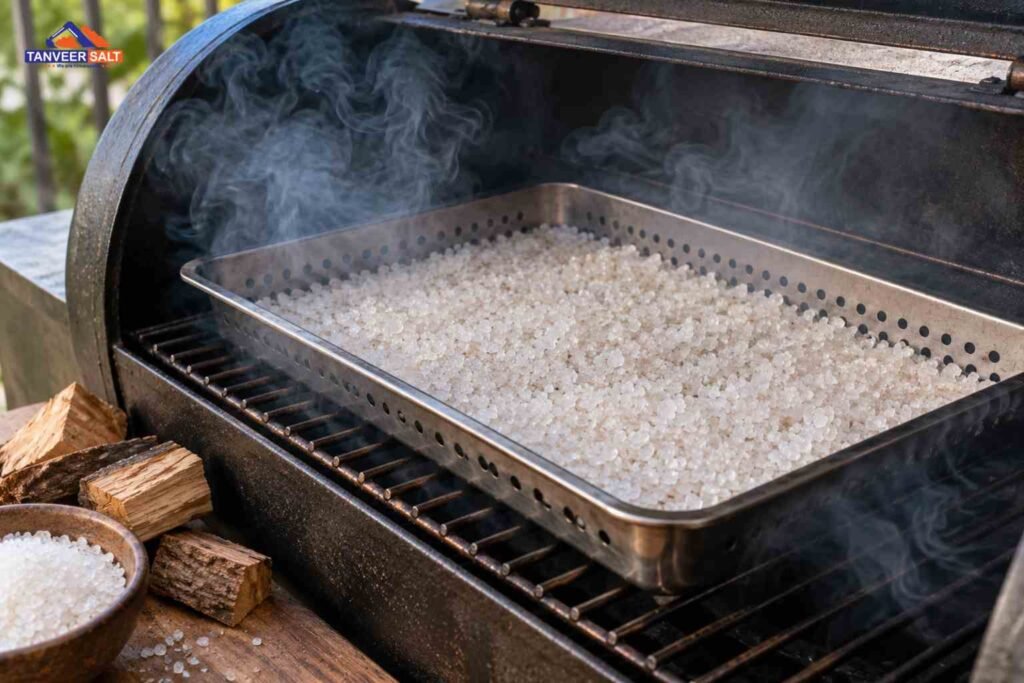
- Spread salt in a thin even layer on a foil tray or perforated pan
- Set up your smoker for cold smoking (under 80°F) or hot smoking
- Place the salt in the smoker and close the lid
- Stir the salt every hour so all crystals are evenly exposed to smoke
- Taste as you go — remove when you reach your preferred intensity
- Cool completely and store in an airtight glass jar
Can You Smoke Sea Salt?
Yes, and sea salt is one of the best salts to smoke. Coarse and flake sea salt have large crystals with plenty of surface area for smoke to cling to. Fine sea salt absorbs less smoke because the crystals are too small.
Flake sea salt is particularly good flat crystals catch smoke beautifully and make an excellent finishing salt.
What Is the Best Salt for Smoking?
Salt Type | Smoking Suitability | Notes |
Coarse sea salt | Excellent | Large crystals, absorbs smoke well |
Flake salt | Excellent | Delicate, great as finishing salt |
Kosher salt | Very good | Large grains, widely available |
Rock salt | Good | Large crystals, strong result |
Himalayan pink salt | Good | Distinctive mineral depth |
Fine table salt | Less ideal | Small crystals, absorbs little smoke |
Cold Smoking vs Hot Smoking Salt
What Is Cold-Smoked Salt?
Cold smoking keeps temperature under 80°F. A smoke tube filled with wood pellets or wood chips works well here. The salt absorbs smoke slowly without any heat cooking it.
What Is Hot-Smoked Salt?
Hot smoking uses higher temperatures and is faster. The result is a bolder, more intense smoky flavour.
Which Method Is Better for Salt?
Cold smoking is preferred for better control over intensity and keeps crystals intact. Hot smoking works when you want stronger flavour faster.
How Long Does It Take to Smoke Salt?
Smoking time depends on salt type, crystal size, wood choice, temperature, smoke intensity, and the level of smokiness you want. There is no single correct smoking time.
As a general guide:
- 4 hours — light, subtle smoke flavour, salt begins to yellow
- 6 to 8 hours — medium smoke, salt starts to brown
- 12 hours — strong smoke flavour, significant colour change
- 24 hours — intense, bold smokiness
Taste the salt as you go and remove it when it reaches the flavour you want.
How to Use Smoked Salt
Smoked Salt for Meat and Steak
Use smoked salt as a finishing salt on steaks, burgers, and BBQ rubs. Sprinkle just before serving to get the full crunch and smoky hit. It adds that grilled flavour even when cooking indoors.
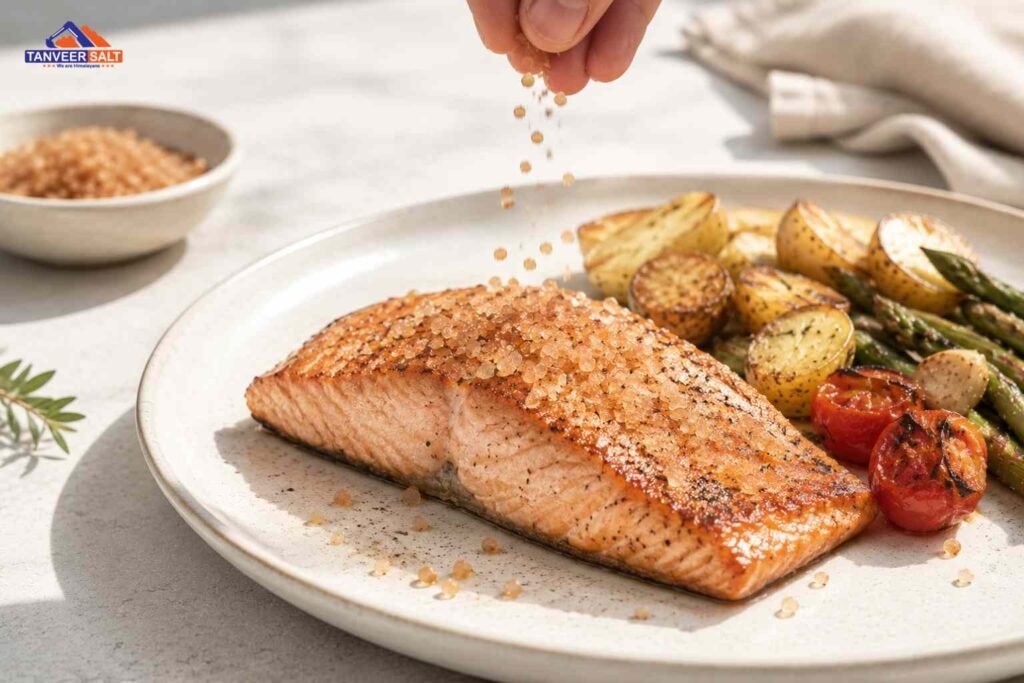
Smoked Salt for Seafood
A pinch on salmon, prawns, or fish adds subtle smokiness without overpowering the natural flavour.
Smoked Salt for Vegetables
Toss roasted vegetables with smoked salt just before serving makes them taste like they came off a BBQ. Especially good on potatoes, corn, and peppers.
Smoked Salt for Eggs
Replace regular salt with smoked salt on scrambled or fried eggs. One small change that completely transforms a simple breakfast.
Smoked Salt for Soups, Sauces and Marinades
Add a pinch to marinades, sauces, stews, or soups for instant smoky depth. A little goes a long way.
Smoked Salt for Cocktails
Rim a margarita or Bloody Mary glass with smoked salt instead of regular salt for a whole new smoky edge.
Smoked Salt for Desserts
Smoked salt on chocolate brownies, caramel, or cookies creates a smoky-sweet contrast that is genuinely addictive. Use sparingly as a finishing touch.
Smoked Salt vs Regular Salt
Feature | Smoked Salt | Regular Salt |
Saltiness | Yes | Yes |
Smoky flavour | Yes | No |
Finishing salt | Excellent | Depends on type |
BBQ applications | Excellent | Good |
Versatility | Very high | High |
Natural Smoked Salt vs Smoke Flavoured Salt
Not all smoked salt on the market is made the same way and knowing the difference helps you buy the right product.
Naturally smoked salt is exactly what it sounds like. Real salt crystals are exposed to actual wood smoke, oak, hickory, apple, or other wood for hours until the smoke compounds bond to the surface. No additives, no shortcuts. What you taste is genuine wood smoke.
Smoke-flavoured salt is regular salt that has been coated or sprayed with liquid smoke or artificial smoke flavouring. It can smell and taste similar but it is not a natural product. Check the ingredients label if you see “smoke flavour” or “natural smoke flavour” listed as an additive, it has not been traditionally smoked.
If you are making your own at home, you automatically get the natural version. If you are buying, look for “cold smoked” or “wood smoked” on the label and a short ingredient list just salt and wood smoke.
What Happens When You Smoke Salt?
Wood smoke compounds including phenols and carbonyls bond to the crystal surface, creating smoky aroma and flavour. Colour shifts from white to yellow or brown. The salt itself remains unchanged.
Frequently Asked Questions
Is smoked salt healthy?
Smoked salt has the same sodium content as regular salt. It is not healthier, the flavour is more intense so you naturally use less. Consume in moderation.
Is smoking salt bad for you?
Naturally smoked salt using real wood is safe to consume. Avoid products using artificial smoke flavourings if you prefer a natural product check the label.
What is smoked salt used for?
Steak, seafood, vegetables, eggs, soups, marinades, BBQ rubs, cocktails, and desserts almost anything savoury, and surprisingly well in sweet dishes too.
Can I make my own smoked salt?
Yes coarse salt, wood chips, and a smoker or grill set up for cold smoking. Full method above.
What is the difference between smoked salt and regular salt?
Regular salt seasons with pure saltiness. Smoked salt adds saltiness plus smoky aroma and flavour far more versatile as a finishing salt.
About the Author
Laiba is a content specialist at Tanveer Salt Traders, a Himalayan pink salt supplier sourcing directly from the Khewra Salt Mine in Pakistan. She researches ingredients, culinary applications, and food science to make sure everything she writes is accurate and actually useful for real people.