
Salt Water Mouth Rinse: Ratio, Benefits, Uses & Side Effects
People have used a salt water mouth rinse for centuries, long before modern mouthwash existed. It’s an oral hygiene natural remedy with real dental professional recommendation behind it, and rinsing mouth with salt water works best when you get the ratio and frequency right.
This guide covers salt water rinse for mouth use: how it works, the exact ratio, benefits, condition-specific guidance, and the side effects worth knowing.

How Does a Salt Water Rinse Work?
What does rinsing your mouth with salt water do, exactly? Two mechanisms explain it.
- pH shift: dissolved salt raises your mouth’s pH, creating a more oral pH alkaline environment. Acidic conditions favor plaque-forming bacteria, so this supports plaque reduction naturally.
- Osmosis: as a mild hypertonic saline solution, it draws excess fluid from swollen gum tissue, an osmotic effect on tissue healing that eases puffiness.
- Gentler than mouthwash: in a salt water vs mouthwash comparison, alcohol is the difference. This alcohol-free mouth rinse won’t dry out healing tissue, which is why dentists recommend it after extractions.
Does salt water mouth rinse kill bacteria? Not directly. Sodium chloride’s antiseptic properties work through bacterial growth inhibition in a saline environment, not by destroying bacteria on contact. This is why salt water has remained a trusted oral care practice for centuries, even alongside modern dentistry.
Salt Water Mouth Rinse Ratio
Getting the ratio right matters too little salt won’t help, too much can irritate your mouth.
Standard ratio: ½ teaspoon salt in 8 oz (240 ml) warm water, the universal baseline.
| Use Case | Ratio |
| General hygiene | ½ tsp : 8 oz |
| Sore throat (warm salt water gargle) | ½ tsp : 8 oz, 15–30 sec |
| Post-extraction care | Don’t rinse for 24 hrs, then ½ tsp |
| Canker sore / ulcer | ½–1 tsp : 8 oz |
Use warm, not hot, water. It dissolves salt fully and soothes irritated tissue better than cold water. Regular table salt works fine; a himalayan salt mouth rinse uses the same ratio, since fine sea salt or Himalayan pink salt are options, not requirements. This homemade mouth rinse costs almost nothing to make.This ½ tsp to 8 oz ratio matches the amount commonly reported as an ADA-recommended guideline for rinsing after dental procedures.
Don’t increase the concentration beyond these amounts; stronger mixes irritate more than they help.
How to Make a Salt Water Mouth Rinse
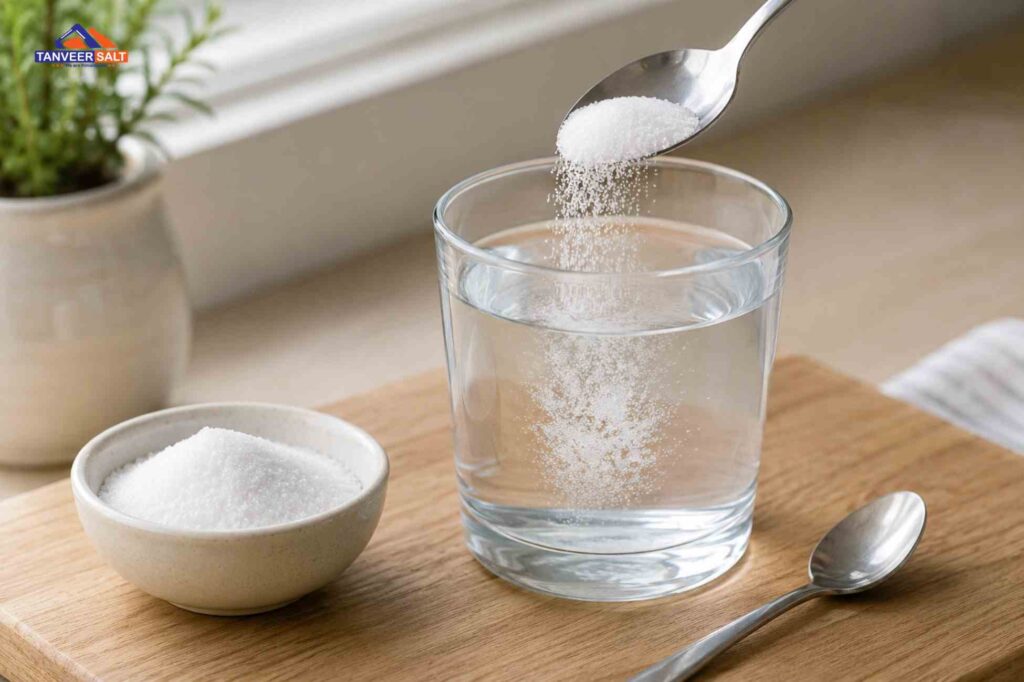
- Heat 8 oz (240 ml) of water until it’s warm, not hot.
- Add ½ teaspoon of salt.
- Stir until the salt dissolves completely.
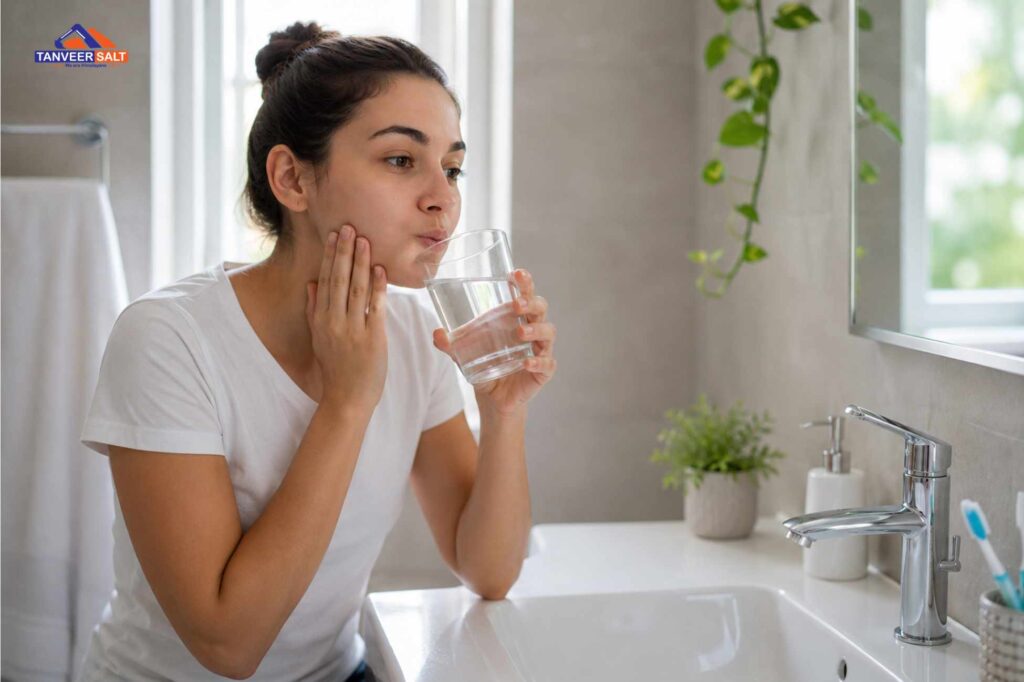
- Swish the solution around your mouth for 30 seconds.
- Spit it out. Do not swallow.
- Discard any leftover solution and prepare a fresh batch each time.
Salt water baking soda mouth rinse: add ½ teaspoon baking soda alongside the salt for extra canker sore relief and fresher breath.
How Often Should I Rinse My Mouth With Salt Water?
Frequency depends on the reason:
- General maintenance: 1–2 times daily
- After dental work: 3–4 times daily, starting 24 hours post-procedure, supporting post-surgical oral healing
- Active sore or ulcer: 2–3 times daily
- Sore throat: every 2–3 hours as needed
Rinse after brushing, not before, so you don’t wash away fluoride — a habit generally in line with reported ADA guidance on oral care timing, and part of good dental procedure aftercare.
Benefits of Rinsing Mouth With Salt Water
As a gum health home remedy, salt water offers five well-supported benefits for everyday oral care:
● Reduces plaque-forming bacteria, useful as part of a gingivitis natural treatment routine alongside regular brushing
● Soothes swollen gums, a natural swollen gums remedy, via the osmotic effect described earlier
● Supports healing after dental procedures, since it’s gentler on tissue than alcohol-based rinses
● Freshens breath naturally a salt water mouth rinse for bad breath doubles as a genuine bad breath natural remedy by flushing out food particles
● Costs little and skips artificial ingredients, making it a reasonable option for people with sensitive gums
Salt Water Rinse for Specific Conditions
Salt water rinsing is commonly recommended for several specific oral conditions here’s what to know for each.
Mouth ulcers and canker sores (aphthous ulcers)
A salt water mouth rinse for ulcers, or mouth ulcer salt water rinse: ½–1 tsp in 8 oz water, 2–3 times daily, for canker sore relief with aphthous ulcer canker sores. Mouth ulcer healing time is usually 7–14 days regardless.
Mouth sores (general)
For mouth sores and salt water rinse use, the same ratio applies. Rinsing the mouth with salt water for sores calms irritation and keeps the area clean. Skip if severely open or bleeding see your dentist.
After tooth extraction
After a tooth extraction, don’t rinse at all for the first 24 hours this can cause alveolar osteitis, better known as dry socket. After that, a gentle ¼–½ tsp salt water mouth rinse, 2–3 times daily, works well as a dry socket prevention rinse, including after wisdom teeth removal.
Oral thrush (fungal infection)
A salt water mouth rinse for thrush offers only mild comfort against candida albicans oral thrush, a fungal infection needing real oral thrush treatment via antifungal medication, not just a salt water rinse for mouth infection concerns. Mayo Clinic lists a warm saltwater rinse as supportive comfort only.
Sore throat
A salt water mouth rinse for sore throat uses the standard ½ tsp ratio: tilt your head back, gargle 15–30 seconds, then spit, repeating every 2–3 hours. This sore throat gargle salt water routine eases discomfort, not the cause.
Hand, foot, and mouth disease
A salt water rinse for hand foot and mouth disease can soothe the sores it causes, especially for children old enough to swish and spit (age 6+). Consult a pediatrician for care.
Toothache
A salt water mouth rinse for toothache offers short-term relief by reducing swelling, but won’t fix the cause, like decay. See a dentist for lasting relief.
Pregnancy
Pregnancy mouth ulcer salt water rinse safe? Generally, yes it’s low-risk for pregnancy-related ulcers or gum sensitivity, but check with your dentist or OB first.
Side Effects of Rinsing Mouth With Salt Water
- Dry mouth from salt: overuse or overly strong mixes pull too much moisture from tissue
- Gingival tissue irritation: water that’s too hot, or salt that’s too concentrated, aggravates already-sensitive gums
- Delayed treatment risk: it can’t cure an abscess or advanced gum disease know when to see a dentist instead of relying on rinsing alone
- Excessive sodium intake from an oral rinse: minimal from rinsing rather than swallowing, but check with your dentist if you manage blood pressure
- Teeth whitening myths: it won’t noticeably whiten teeth, and expecting that can lead to overuse trying to chase a cosmetic effect it can’t deliver
Used correctly, this remedy is low-risk for most healthy adults.
FAQs
Is it good to rinse your mouth with salt water?
Yes, it supports gum health and eases discomfort after dental work.
Will salt water draw out a tooth infection?
It reduces surface bacteria, but can’t resolve a true infection alone.
Should I brush before or after a salt water rinse?
After, so you don’t wash away fluoride.
Is table salt okay for a salt water mouth rinse?
Yes, plain table salt works fine.
The Bottom Line
A salt water mouth rinse is one of the simplest, most affordable additions you can make to your oral care routine, when used at the right ratio and frequency. Key takeaways:
- Ratio: ½ teaspoon of salt in 8 oz of warm water is the standard for most everyday uses.
- What it does: supports healing and helps reduce bacteria, but doesn’t replace brushing, flossing, or professional dental treatment.
- Frequency: cap it at 3–4 times daily to avoid dry mouth. Pair it with a tongue scraper salt rinse routine for extra freshness.
This article is for informational purposes only. Consult your dentist for persistent pain, swelling, or suspected infection salt water rinsing supports oral care but cannot replace professional treatment.
For more on the salt behind this remedy, see our guides on the advantages of Himalayan salt and its sodium content. And if your symptoms persist beyond a few days, don’t wait it out and schedule a visit with your dentist.
About the author:
Written by Laiba, a content specialist at Tanveer Salt Traders who researches and writes evidence-based articles on Himalayan salt, oral care, and wellness. This article is based on guidance from Mayo Clinic, a Medical News Today report on American Dental Association recommendations, and other published healthcare resources.