
What Is Finishing Salt? Types, Uses & Tips
You know that feeling when a dish tastes almost right but something is missing? Nine times out of ten, it is finishing salt. That final pinch just before serving the one that makes everything pop.
Finishing salt is not the same as the salt you cook with. It is a higher quality, more texturally interesting salt used as the very last touch on a dish. It adds flavour, crunch, and visual appeal in a way that cooking salt simply cannot.
This guide covers what finishing salt is, the most popular types including Himalayan pink salt, Maldon, and fleur de sel, how to use it properly on everything from steak to desserts, and how to make two simple versions at home.
What Is Finishing Salt?
Finishing salt is a sodium chloride-based salt used as a final flavour and texture layer sprinkled on food right before serving, not during cooking.
The difference from table salt or kosher salt comes down to texture, timing, and purpose. Table salt dissolves into food during cooking. Finishing salt sits on top, giving you distinct flaky crystals or crunchy grains that you actually feel and taste as you eat. Some finishing salts also carry trace minerals that affect colour and flavour in subtle but noticeable ways.
Think of table salt as the foundation and finishing salt as the final flourish.
Types of Finishing Salt
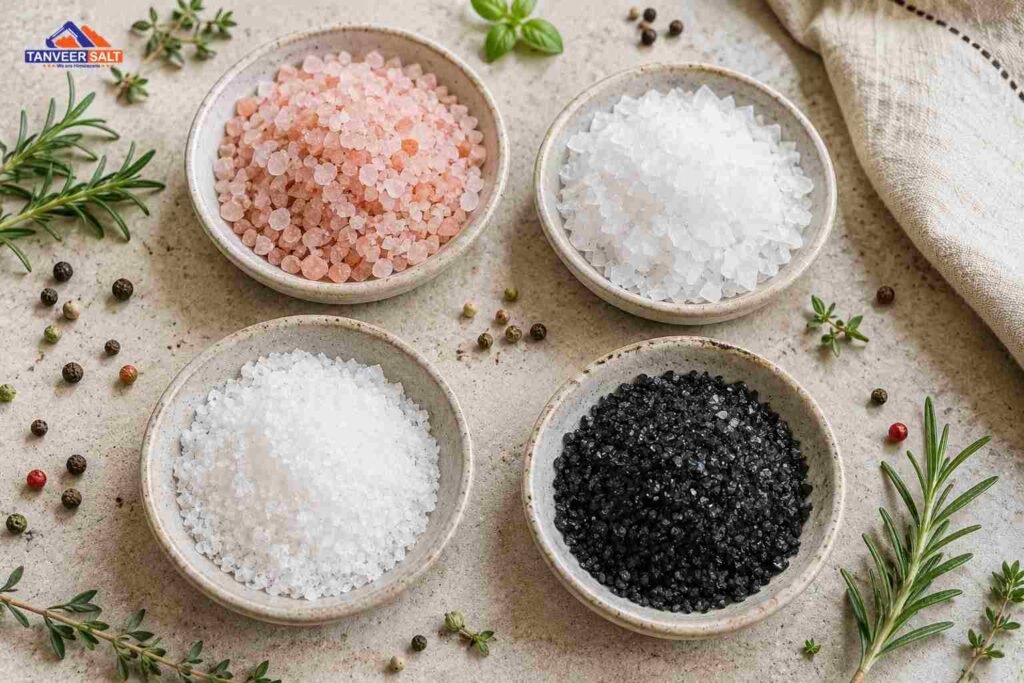
Pink Himalayan Salt
Himalayan pink salt is one of the most versatile finishing salts you can use. The pink crystals add visual appeal and a mild mineral depth that works beautifully on steaks, salads, fruits, desserts, and dips. The crunchy texture holds up well as a finishing salt you get that satisfying bite that table salt never delivers.
It is mined from the Khewra Salt Mine in Pakistan’s Salt Range and contains naturally occurring trace minerals that give it both its colour and subtle flavour complexity. Learn more in our Advantages of Himalayan Salt guide.
Maldon Salt
Maldon is probably the most recognised finishing salt in professional kitchens. It comes from the Blackwater estuary in England and forms thin, flaky pyramid-shaped crystals.
The flavour is clean, fresh, and slightly earthy and those delicate flakes dissolve beautifully on the tongue. It is the go-to finishing salt flake for chefs who want texture without overpowering flavour.
Fleur de Sel
Fleur de sel is a premium finishing sea salt harvested from the surface of salt ponds in France. It has a delicate, moist texture that melts slowly on food making it perfect for fruits, soups, salads, and desserts where you want a gentle salt presence rather than a bold crunch.
Black Finishing Salt
Some black finishing salts are made with food grade activated charcoal, giving them a dramatic dark colour. It is used mainly for visual contrast striking on pasta, eggs, seafood, and dark-plated dishes. The flavour is milder than its appearance suggests.
Finishing Salt for Steak
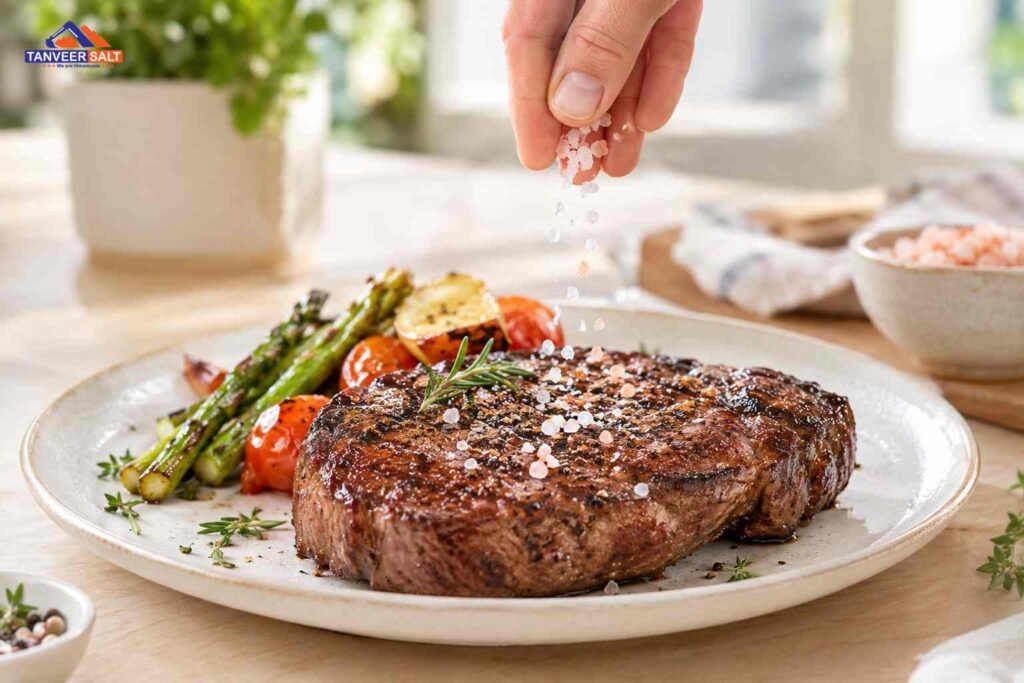
Finishing salt on steak is one of the most popular uses and for good reason. When you cook a steak, the surface salt dissolves into the meat and the crust. Finishing salt is added after cooking, which means the crystals stay intact. You get a satisfying crunch with every bite alongside the seared meat.
The best options for steak are Himalayan pink salt for its mineral depth and visual appeal, or Maldon for its delicate flaky texture. Sprinkle generously immediately before serving, not a minute earlier.
How to Use Finishing Salt
The rules are simple:
- Sprinkle right before serving: this is when you get the most texture and surface flavour from finishing salt. The crystals stay intact and you taste them properly
- Use your fingers, not a shaker: pinching and sprinkling gives you control over where it lands and how much you use
- Less is more: finishing salt is concentrated flavour. A light, even sprinkle is all you need
- Avoid over-salting delicate dishes: light fish, subtle sauces, and egg-based dishes need a very light hand
For more ideas on using Himalayan pink salt in the kitchen, check out our guide on Cooking with Pink Himalayan Salt.
Can You Cook With Finishing Salt?
Technically yes but you lose the whole point. The texture that defines finishing salt disappears completely when exposed to heat. Save it for the final step and use regular kosher salt or table salt during cooking.
Finishing Salt Recipes Make Your Own
Smoked Finishing Salt
Smoked finishing salt adds deep, woody flavour that pairs perfectly with steaks, sauces, soups, and stews.
Ingredients:
- 2 cups Himalayan pink salt or sea salt
- Wood chips (oak, hickory, apple, or alder)
Method:
- Set your smoker to 300 to 350°F
- Spread salt in a thin layer on a perforated tray or foil with holes
- Smoke for 2 to 4 hours, stirring occasionally
- Remove and allow to cool completely
- Store in an airtight glass jar
No Smoker? Place wood chips in a heavy pan, put a rack above them, spread salt on foil on the rack, cover tightly with foil and heat on low for 30 to 45 minutes. Same smoky result on your stovetop.
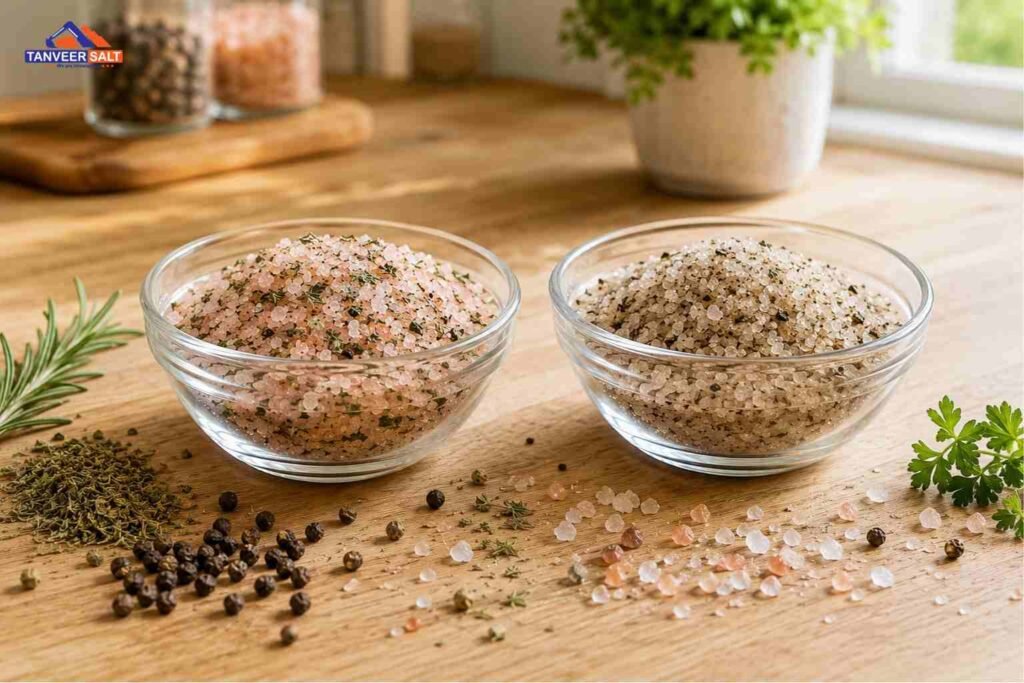
Herb Finishing Salt
Simple, versatile, and ready in minutes.
Ingredients:
- 1 cup Himalayan pink salt
- 1 tsp black pepper
- 1 tsp dried rosemary
- 1 tsp dried oregano
- ½ tsp dried parsley
Method:
Mix all ingredients together. Store in a sealed glass jar. Use within 3 months for best flavour.
Works on roasted vegetables, grilled chicken, pasta, and eggs.
Frequently Asked Questions
Is pink Himalayan salt a finishing salt?
Yes it is one of the most popular finishing salts available. Its mild mineral flavour, natural pink colour, and satisfying crunch make it ideal for finishing steaks, salads, desserts, and dips.
What is the difference between finishing salt and kosher salt?
Kosher salt is used during cooking, it dissolves into food and seasons it from within. Finishing salt, including French finishing salt like fleur de sel, is used after cooking to add texture and a final burst of flavour on the surface.
What is the difference between cooking salt and finishing salt?
Cooking salt is used while you are cooking it seasons food from the inside. Finishing salt comes at the very end, right before serving. It is about texture, crunch, and visual appeal as much as flavour.
Do you need to let finishing salt air-dry before using it?
Only if it has absorbed moisture this can happen with Himalayan pink salt in humid environments. Spread it on a tray and leave in a dry spot for a few hours. It will return to its normal texture.
The Bottom Line
Finishing salt is one of the simplest upgrades you can make in the kitchen. The right pinch at the right moment right before the plate hits the table changes everything.
Keep a jar of Himalayan pink salt on your counter, try Maldon on your next steak, and experiment with a homemade smoked or herb blend when you want something more interesting. Once you start finishing with salt, you will not go back.
About the Author
Laiba is a content specialist at Tanveer Salt Traders, a Himalayan pink salt supplier sourcing directly from the Khewra Salt Mine in Pakistan. She researches ingredients, culinary applications, and food science to make sure everything she writes is accurate and actually useful for real people.