
Himalayan Pink Salt for Cooking: Everything You Need to Know
Himalayan pink salt for cooking has become a widely used ingredient in modern kitchens, but many people still don’t fully understand how to use it correctly. It is often seen as a natural alternative to table salt, but its real value lies in how versatile it is across different cooking methods.
Sometimes called “pink Tibetan salt,” this name is misleading because the salt actually comes from Pakistan, not Tibet.
This guide explains everything you need to know — from its origin and mineral content to coarse vs fine grains, salt block cooking techniques, and how to use it in everyday meals.
What is Himalayan pink salt? Origin, colour and minerals
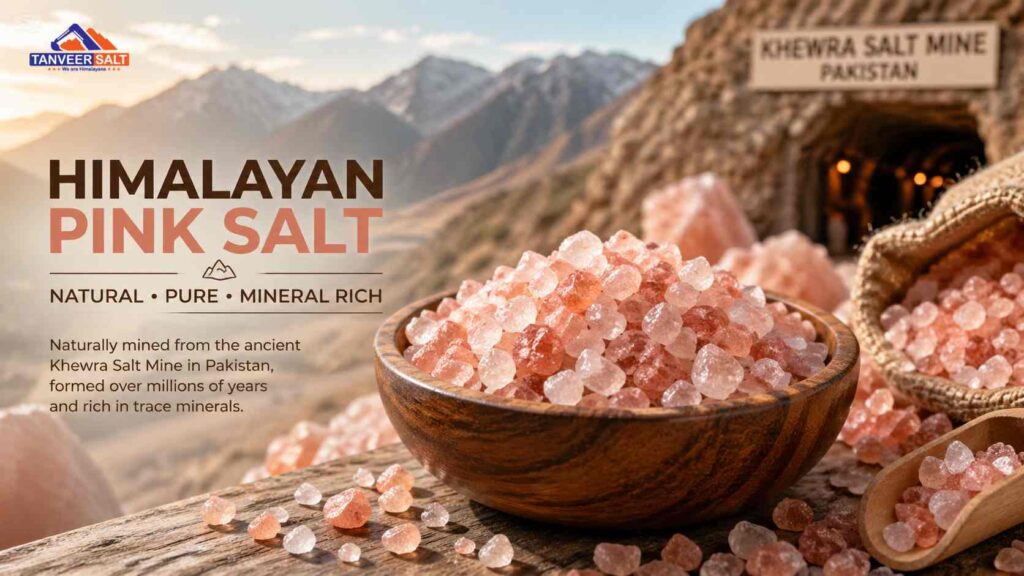
The Khewra Salt Mine in Pakistan’s Salt Range is the source of Himalayan pink salt, a naturally occurring rock salt. This mine is considered one of the oldest and largest salt deposits in the world, developed over millions of years through intense geological pressure and natural formation processes.
The pink coloration is caused by the presence of iron oxide along with trace minerals embedded within the salt crystals. lighter shades contain more pure sodium chloride, while darker pink tones indicate slightly higher mineral content.
It contains up to 84 trace minerals, including potassium, magnesium, and calcium, but these only make up a very small percentage (about 1–2%) of the salt.
In taste, Himalayan pink salt is slightly smoother and less sharp than refined table salt, which is why it is often preferred for cooking and seasoning.
Coarse vs fine ground Himalayan pink salt — which to use when
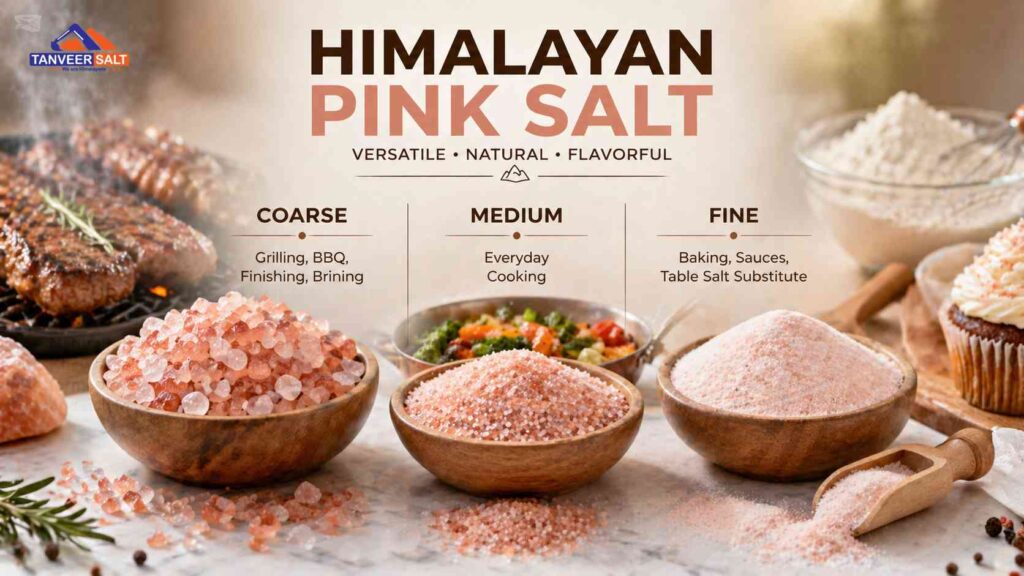
Choosing between coarse himalayan salt and ground himalayan salt depends on cooking style.
Type Best Use Texture Notes
| Coarse Himalayan pink salt | Grilling, BBQ, finishing, brining | Crunchy | Strong texture & visual appeal |
| Medium grind | Everyday cooking | Slight grain | Balanced use |
| Fine ground Himalayan pink salt | Baking, sauces, table salt substitute | Smooth | Dissolves quickly |
Fine salt is more compact, meaning it contains slightly more sodium per teaspoon than coarse salt due to fine vs coarse grind sodium difference.
Practical tip: If replacing table salt with coarse pink salt, slightly increase quantity for the same taste.
Always choose food-grade rock salt for cooking.
How to use Himalayan pink salt for cooking (6 applications)
Himalayan pink salt for cooking is extremely versatile and works in many everyday and gourmet uses.
Everyday seasoning and cooking
Fine salt is used as a direct salt substitute in curries, rice, soups, and vegetables.
Finishing salt
Coarse crystals are sprinkled on finished dishes like steak, roasted vegetables, or desserts for texture and flavour enhancement.
Grilling and BBQ
Used before cooking meat, coarse salt helps form a crust and enhances natural flavour.
Baking
Fine salt blends evenly into doughs and batters, making it ideal salt for baking.
Brining and pickling
Dissolved in water, it creates a natural brine used for preservation and flavouring.
Salt rims and cocktails
Coarse salt is used on glass rims for citrus drinks and specialty cocktails.
Pink Himalayan salt works as both a cooking ingredient and a finishing salt, making it one of the most versatile gourmet salt cooking options.
Cooking with Himalayan salt blocks, plates and bowls (step-by-step)
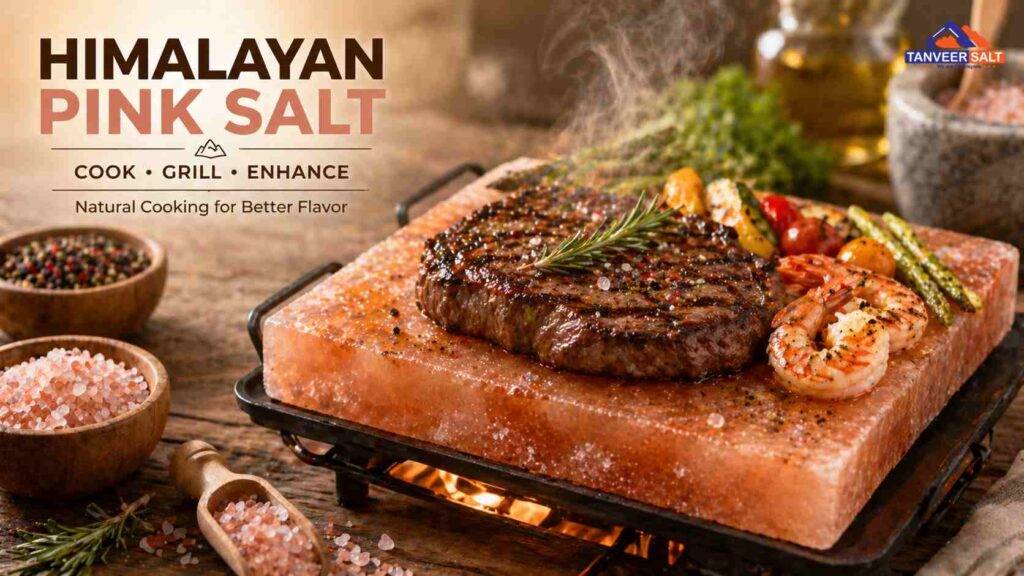
Salt blocks are used in himalayan salt block cooking and salt plate cooking to add natural seasoning.
Heating process:
30–45 minutes gradual heating time
Steps:
- Place salt block in a cold oven or grill
- Heat slowly to 150°C
- Increase gradually to 230°C
- Stabilize before cooking
Always heat salt blocks slowly — moisture and salt block cracking can occur if heated too quickly.
Once ready, you can cook steak, seafood, vegetables, or eggs directly on the surface. This is commonly used in salt block steak recipes.
Salt plates can also be chilled for sushi or desserts, while salt bowls are used for serving sauces and snacks.
Substituting Himalayan pink salt for table salt
Himalayan pink salt can be used in a simple 1:1 ratio as a salt substitute cooking option.
Both table salt and pink salt contain almost the same sodium chloride content (around 97–98%). The difference lies in processing and mineral traces, not sodium reduction.
However, most pink salt is not iodized.
Learn more here: Does Pink Himalayan Salt Have Iodine
Because of its stronger mineral flavor, many people naturally use slightly less salt in cooking.
Caring for Himalayan salt cookware
Proper care increases lifespan:
- Wipe with damp cloth after use
- Do not use soap (natural anti-bacterial properties salt)
- Dry completely before storing
- Keep away from moisture
- Heat and cool slowly
With proper care, salt blocks and cookware can last for years.
FAQ
Can you cook with Himalayan pink salt?
Yes, it can be used like regular salt in cooking and baking.
Can you cook on a salt block?
Yes, but only after slow heating to prevent cracking.
Is coarse salt different from fine salt?
Yes, they are used differently in cooking applications.
Is pink Tibetan salt real?
It is actually Himalayan salt from Pakistan, not Tibet.
Is pink salt expensive?
Yes, but it requires less because it has more flavor.
Conclusion
Himalayan pink salt for cooking is more than a health trend — it is a versatile ingredient that enhances everyday meals and supports gourmet cooking techniques.
Key takeaways:
- Use fine-ground for everyday cooking, coarse for finishing and grilling
- It can replace table salt 1:1, but slightly less is often enough
- Salt blocks last years with proper slow heating and care
It is important to stay within the recommended 2300 mg sodium daily limit as advised by the American Heart Association sodium guidelines.
Related Articles:
Does Pink Himalayan Salt Have Iodine
Bathing in Pink Himalayan Salt
Products:
Explore edible Himalayan pink salt options (Coarse and Fine-Ground Pink Salt)
2 Responses