
Bathing in pink Himalayan salt: Benefits, Uses and What to Expect
Bathing in pink Himalayan salt is a simple natural wellness practice used for relaxation, skin care, and stress relief. Many people wonder whether it actually works and how to use it safely. In this guide, you will learn the benefits of bathing in pink Himalayan salt, how much to use, step-by-step instructions, side effects, and safety for different groups.
Introduction

Can you bathe in pink Himalayan salt? Yes, you can. Bathing in pink Himalayan salt is widely used as a natural mineral salt bath that may support relaxation, hydration, and skin comfort.
Quick Answer: Yes, you can put pink Himalayan salt in your bath. Add ¼ to 1 cup to warm water (37–39°C), soak for 15–20 minutes, then rinse and moisturise. It may help soothe skin, support hydration, and promote relaxation.
Wholesale Pink Himalayan salt originates from the Khewra Salt Mine in Pakistan and includes trace minerals like magnesium, calcium, and potassium, which give it its pink colour. This natural mineral salt bath is often used as a pink salt soak for skin and relaxation support.
What does pink Himalayan salt do in the bath?
Pink Himalayan salt dissolves in warm water and releases trace minerals that interact with the skin’s outer layer, the stratum corneum. Through osmosis, it may support skin barrier function by helping reduce moisture loss. Warm water also promotes vasodilation, improving relaxation and muscle comfort during bathing.
Benefits of bathing in pink Himalayan salt
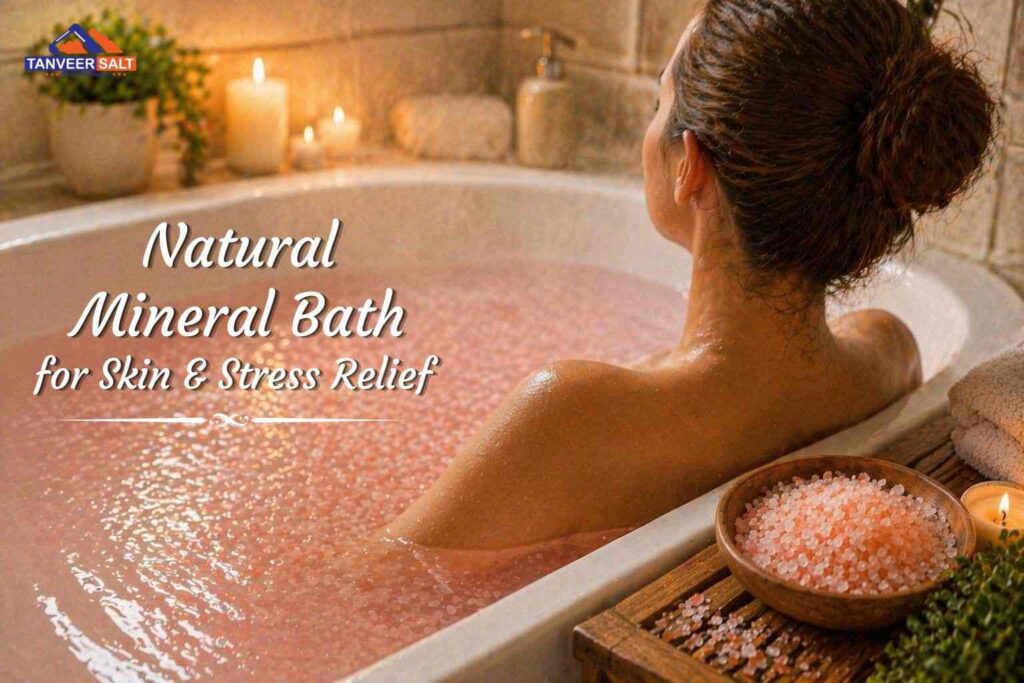
Although direct clinical studies on Himalayan salt baths are limited, research on mineral salt baths such as hypnotherapy shows potential benefits. Studies like Proksch et al. (2005) and guidance from the National Eczema Association and American Academy of Dermatology support mineral bathing for skin support.
Supports skin hydration and barrier function
Mineral salt baths may help reduce trans-epidermal water loss and support skin barrier function, improving skin softness and hydration over time.
May soothe eczema, psoriasis and dry skin
Bathing in pink Himalayan salt may help relieve atopic dry skin between flare-ups. It should not be used on active eczema or broken skin.
Promotes muscle relaxation and stress relief
Warm salt baths support distillation and muscle relaxation, making them useful as a stress relief bath soak after physical or mental fatigue.
Delivers trace minerals to the skin
Magnesium and potassium are among the trace minerals in pink Himalayan salt. While magnesium absorption through skin is limited, it may still support overall skin wellness.
May help soothe acne and insect bites
Salt has mild cleansing properties that may help calm minor irritation and improve skin comfort.
Overall, the advantages of bathing in pink Himalayan salt are supportive but should be seen as a complementary wellness practice rather than a medical treatment.
How much pink Himalayan salt to use in a bath
| Bath type | Amount | Water temp | Soak time |
| Standard bath | ¼–1 cup (60–250g) | 37–39°C | 15–20 min |
| Sensitive skin | ¼ cup | 37–39°C | 10–15 min |
| Children (2+) | 1–2 tbsp | Lukewarm | 10 min |
| Foot soak | 2–3 tbsp | Warm | 10–15 min |
Always ensure salt is fully dissolved before entering the bath. Undissolved crystals may irritate sensitive skin.
How to use pink Himalayan salt in a bath – step by step
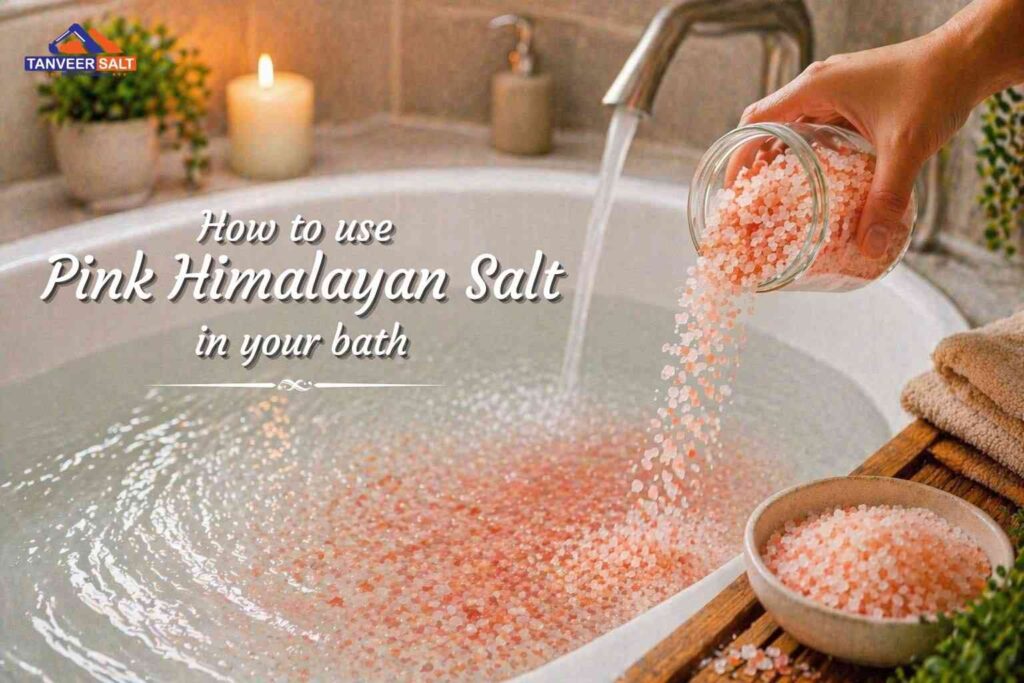
- Rinse your body before entering the bath
- Fill the tub with warm water (37–39°C)
- Add ¼ to 1 cup of pink Himalayan salt while water is running
- Stir until fully dissolved
- Optional: add essential oils diluted in carrier oil (lavender or rose)
- Soak in the bath for 15–20 minutes.
- Rinse your body with clean water after the bath.
- After bathing pat dry and use moisturizer within three minutes.
Limit use to 2–3 times per week and avoid applying it on open wounds or irritated skin.
Side effects of pink Himalayan salt in a bath
- Skin dryness due to moisture loss through osmosis
- Mild dehydration from warm water exposure
- Skin irritation if salt is not fully dissolved
- Increased heart rate due to hot water temperature
- Worsening of eczema during active flare-ups
Most side effects can be avoided with correct dilution, temperature control, and proper moisturizing after bathing.
Who should be cautious – safety for specific groups
| Category | Concern | Recommendation |
| Pregnant women | Core body temperature increase | Use lukewarm water, under 10 min |
| High blood pressure | Heat stress | Avoid hot baths |
| Kidney disease | Mineral sensitivity | Consult doctor |
| Sensitive skin | Irritation risk | Use low concentration |
| Children under 2 | Skin sensitivity | Avoid use |
| Diabetes | Reduced sensation | Check water temperature |
If unsure, consult a healthcare professional before using mineral salt baths.
Pink Himalayan salt bath vs Epsom salt bath
Himalayan salt has sodium chloride and trace minerals, which encourage mild relaxation and skin comfort. Epsom salt contains magnesium sulfate and is more commonly used for muscle recovery and soreness relief.
Himalayan salt is generally preferred for skin wellness and relaxation, while Epsom salt is stronger for muscle pain relief.
Are pink Himalayan salt baths safe for regular use?
When used in reasonable amounts, pink Himalayan salt baths are generally safe for the majority of adults. They are often used in mineral salt bath practices and hypnotherapy routines for relaxation and skin comfort.
When used correctly, bathing in pink Himalayan salt does not significantly increase sodium levels in the body because absorption through the skin is minimal. The main benefit comes from warm water exposure, which improves circulation and relaxation.
For most people, a pink salt soak 2–3 times per week is ideal. This helps avoid skin dryness while supporting skin barrier function.
People with sensitive or a topic dry skin should start with lower concentrations to reduce trans-epidermal water loss and avoid irritation.
Overall, pink Himalayan salt in bath water benefits are supportive and should be seen as a wellness practice rather than a medical treatment.
FAQ
Q1: Can you put pink Himalayan salt in your bath?
Yes, ¼–1 cup in warm water (37–39°C) for 15–20 minutes may support relaxation and skin comfort.
Q2: Can I use pink Himalayan salt in a bath every day?
No, 2–3 times per week is recommended to avoid skin dryness.
Q3: How much pink Himalayan salt should I use?
Use ¼–1 cup depending on skin sensitivity and bath size.
Q4: Can you bathe in pink Himalayan salt when pregnant?
Yes, but use lukewarm water and try to keep your bath under 10 minutes. Consult a doctor first.
Q5: Does it help with eczema?
It may help between flare-ups but should not be used on active or broken skin.
Conclusion
Bathing in pink Himalayan salt is a simple natural wellness practice that may support skin hydration, relaxation, and overall comfort.
Key takeaways:
- Use ¼ to 1 cup of pink Himalayan salt per bath depending on skin type.
- For safe use, keep the water temperature between 37 and 39°C.
- Always rinse and moisturize after bathing to protect the skin barrier.
CTA
If you’re looking to improve your wellness routine, bathing in pink Himalayan salt can be a gentle and supportive addition when used correctly.
Disclaimer
This article is for informational purposes only. It is advisable to seek medical guidance before use if you are pregnant, have existing skin conditions, or suffer from heart or kidney-related health issues.
One Response