
Is Salt Water Good For Your Hair? The Complete Honest Answer
Is salt water good for your hair? The answer is not simple. Salt water can both improve and damage hair depending on exposure time, water type, and aftercare routine. Ocean water, salt water pools, and DIY salt sprays all affect hair differently.
This guide explains the science behind how salt water interacts with the hair cuticle, why results vary between hair types, and when it can actually help or harm your hair health. We will also cover ocean swimming, salt water pools, and homemade salt sprays so you can understand exactly how to use salt safely for your hair.
How Does Salt Water Affect Your Hair? — The Science Explained
To understand why salt water affects your hair, it helps to know a little about its structure.
Each strand of hair has a protective outer layer called the cuticle. It is made of overlapping scales that protect the inner hair, help retain moisture, and keep hair smooth and shiny when they lie flat.
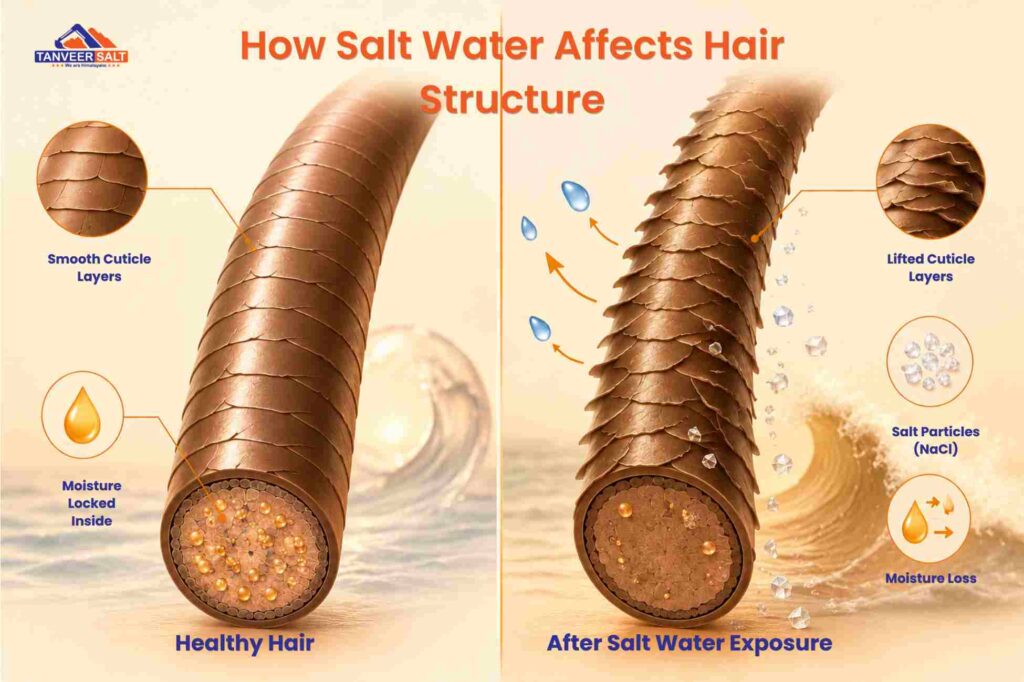
When your hair comes into contact with salt water, it loses some moisture. This is why hair often feels dry or rough after swimming in the ocean. At the same time, salt slightly lifts the cuticle, which can make hair look fuller and more textured.
In small amounts, this is what creates the “beachy wave” effect many people notice after a day at the beach. However, with frequent or long exposure, hair can start to lose too much moisture. Over time, this may leave it feeling dry, rough, and more prone to breakage.
Many people ask, is salt water good for your curly hair or why is salt water good for your frizzy hair. In moderation, salt can help enhance natural waves and curls, making them look more defined and textured after ocean exposure.
The biggest issue at the beach is not just salt water, but also sun exposure. Together, salt and sunlight can make hair drier and reduce its natural shine.
In simple terms, salt water affects hair mainly by removing moisture and slightly changing the hair’s surface. This is why it can improve texture in the short term, but may cause dryness if exposure is too frequent.
Benefits of Salt Water for Your Hair
Salt water doesn’t directly increase hair growth, but it helps maintain a cleaner scalp by removing excess oil, dead skin cells, and product buildup. A balanced scalp environment can support healthier-looking hair over time.
It also provides gentle natural exfoliation for the scalp. The grainy texture of salt helps lift away dead skin cells without the need for harsh chemical exfoliants. This is why salt-based treatments are sometimes used in natural hair care routines, and why Himalayan pink salt is often preferred in DIY applications due to its trace mineral content.
Adds Texture and Volume
Salt water helps absorb excess oil from the scalp and slightly lifts the hair cuticle, creating natural-looking volume and soft, beach-textured waves without heavy styling products or heat.
Enhances Beachy Waves and Curl Definition
In moderation, salt can enhance natural wave and curl patterns by gently lifting the hair cuticle. This improves texture definition and creates the relaxed, beach-wave effect commonly seen after ocean exposure.
Helps Control Dandruff and Oily Scalp
Salt water may help manage oily scalp conditions temporarily because it absorbs excess sebum and reduces product buildup that can contribute to flaking. However, it should be used in moderation, as overuse can strip natural oils and lead to dryness or irritation.
How Salt Water Can Damage Your Hair — Overexposure Effects
Damage from salt water usually occurs when exposure is frequent or unmanaged. Occasional swimming with proper aftercare is generally safe, but repeated exposure can gradually affect both the hair and scalp.
1. Dryness and Moisture Loss
Salt naturally draws moisture from the hair. Even after leaving the water, salt residue can continue pulling water from the hair shaft, leaving hair dry, rough, and more brittle over time. This moisture loss is one of the most common reasons hair feels damaged after repeated ocean exposure.
Prevention: Rinse hair with fresh water after swimming and use a moisturizing conditioner to restore hydration.
2. Cuticle Damage and Color Fading
Repeated salt exposure can weaken the hair cuticle, the protective outer layer that helps retain moisture and maintain strength. As the cuticle becomes more vulnerable, hair may feel rougher, become more prone to breakage, and lose its natural shine. Dyed or chemically treated hair is especially susceptible because salt water can accelerate color fading and reduce vibrancy.
Prevention: Apply a leave-in conditioner before swimming and consider a swim cap if your hair is color-treated or fragile.
3. UV and Scalp Stress
Salt water alone is usually manageable, but combined with strong sunlight it can increase dryness and environmental stress. This combination may leave hair looking dull while also stripping natural oils from the scalp, potentially causing dryness, flaking, and irritation. In severe cases, excessive scalp irritation may contribute to temporary shedding.
Prevention: Protect hair from sun exposure, moisturize the scalp when needed, and avoid prolonged exposure without rinsing.
Final Scientific Note
Salt water itself is not inherently damaging. Most problems arise from repeated moisture loss, prolonged UV exposure, and inadequate aftercare. With proper rinsing, conditioning, and protection, occasional salt water exposure is unlikely to cause significant harm.
Is Ocean / Sea Water Good For Your Hair? — Beach Swimming Guide
Many readers specifically ask, is sea salt water good for your hair? The answer is yes—in moderation.
Occasional ocean swimming can provide benefits such as improved texture, temporary volume, and gentle scalp cleansing. Problems generally occur when people spend long periods in seawater repeatedly without proper aftercare.
Unlike homemade salt water, ocean water contains a complex mineral profile that includes sodium, chloride, magnesium, potassium, and calcium. This broader mineral composition may provide short-term scalp benefits during brief exposure.
However, at the beach, salt water combined with strong sunlight can make hair dry faster and reduce its natural shine over time. This is why protecting your hair at the beach is just as important as protecting your skin.
Beach Hair Protection Protocol
- Apply a leave-in conditioner or hair protective oil before entering the water.
- Wet your hair with fresh water before swimming. Pre-saturated hair absorbs less seawater.
- Rinse your hair with fresh water within 30 minutes after swimming.
- Use a moisturizing shampoo and conditioner after your beach day.
- Apply a deep conditioning treatment once per week during beach season.
If your hair is dyed, highlighted, bleached, or chemically treated, extra protection is particularly important because seawater can accelerate color fading and cuticle damage.
The key takeaway is simple: is swimming in salt water good for your hair? Yes, when exposure is limited and followed by proper care. Long, repeated exposure without rinsing is where problems begin.
Is Salt Water Pool Good For Your Hair?
Many people ask whether salt water pools are good for hair, especially because they assume they work the same way as ocean water. but they are actually very different.
In fact, salt water pools and ocean water are completely different environments, and they also differ significantly from traditional chlorine pools.
A salt water pool uses a chlorine generator. Salt (NaCl) is converted into a small amount of dissolved chlorine gas (Cl₂) to sanitize the water. This means salt water pools are not chlorine-free, but they generally contain lower chlorine levels than conventional pools.
Another major difference is salt concentration.
- Ocean water: approximately 35,000 ppm salt
- Salt water pools: approximately 3,000–4,000 ppm salt
- Traditional chlorine pools: very low salt levels
This means ocean water contains roughly ten times more salt than a typical salt water pool.
| Swimming Environment | Hair Impact |
| Salt Water Pool | Lower salt concentration, mild chlorine presence, gentler drying effect |
| Ocean / Sea Water | High salt content, greater texture benefits, increased dryness risk |
| Traditional Chlorine Pool | Higher chemical exposure, greater risk of cuticle damage |
For most swimmers, salt water pools are the least damaging option. They provide a compromise between sanitation and reduced chemical exposure. Compared with ocean water, they expose hair to far less salt. Compared with chlorine pools, they generally contain lower levels of harsh sanitizing chemicals.
Verdict: is a salt water pool good for your hair? In most cases, yes. Salt water pools are typically gentler on hair than both traditional chlorine pools and ocean water.
Even so, basic hair protection remains important. Use a leave-in conditioner before swimming, consider swim cap hair protection if your hair is fragile or dyed, and rinse thoroughly after each swim session.
Is Salt Water Spray Good For Your Hair? — DIY vs Commercial
A common question is whether salt water spray is actually good for your hair. The answer is yes—when used correctly. Most people asking this question are not referring to ocean swimming. Instead, they want the textured, beach-inspired look created by commercial or homemade salt sprays.
Commercial salt sprays are generally formulated with ingredients designed to reduce dryness. Many contain glycerin humectant hair spray ingredients, aloe vera, or lightweight conditioning agents that help offset the drying effects of salt. These products are specifically designed to provide sea salt hair spray benefits while minimizing damage.
DIY sprays, on the other hand, are often just salt and water. Without moisturizing ingredients, they can quickly lead to dryness if overused. This is why many hair professionals recommend adding oils or conditioning agents when making your own spray.
Is Salt Water Good For Your Hair Overnight?
Another thing people often ask is salt water is good for your hair overnight.
The answer is no.
Leaving salt water in your hair overnight allows it to keep drawing moisture from the hair for hours, which can leave it feeling dry and rough by morning.
Instead, apply salt spray for styling purposes, leave it in for approximately 15–20 minutes, and then rinse if needed. Overnight exposure offers no additional benefits and significantly increases the risk of moisture loss.
DIY Himalayan Pink Salt Hair Spray Recipe
If you’re thinking about making homemade salt water for your hair, a properly balanced DIY spray can be used as a styling tool when applied occasionally.
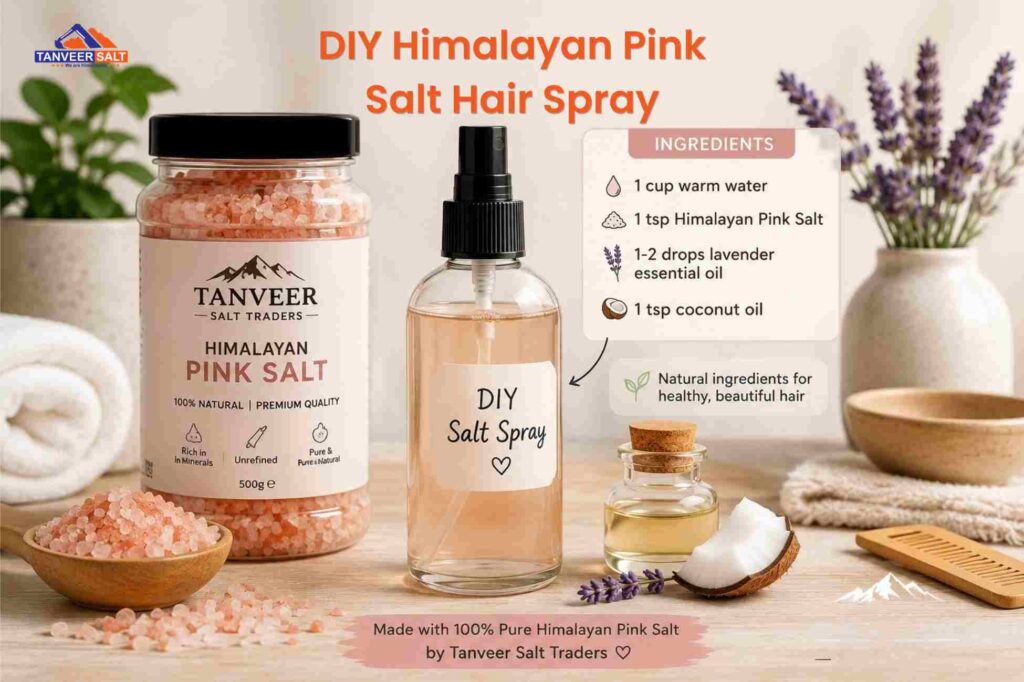
Ingredients
- 1 cup warm water
- 1 teaspoon fine Himalayan pink salt
- 1–2 drops lavender essential oil
- 1 teaspoon coconut oil
Step 1: Warm the Water
Use warm water rather than boiling water. Warm water helps dissolve the salt evenly while preserving the quality of other ingredients.
Step 2: Dissolve the Himalayan Pink Salt
Add the salt and stir thoroughly until completely dissolved.
Step 3: Add Lavender Essential Oil
Lavender oil adds fragrance and may provide additional soothing benefits for the scalp.
Step 4: Add Coconut Oil
Coconut oil helps create a moisture barrier that reduces excessive drying.
Step 5: Transfer to a Spray Bottle
Pour the mixture into a clean spray bottle and shake before each use.
How to Use It
Spray lightly onto damp hair and scrunch to encourage waves or curls. Leave for 15–20 minutes, then rinse if desired.
Recommended Frequency
Use once per week or once every two weeks. Avoid daily application.
Salt Water For Specific Hair Concerns — Curly, Frizzy, Hair And Skin
Different hair types respond differently to salt exposure. Understanding those differences can help you get the benefits without experiencing unnecessary dryness.
No matter your hair type, the aftercare routine is the same—rinse, moisturize, and limit frequency.
Salt Water For Curly And Frizzy Hair
Salt can help enhance natural curl patterns by making them look more defined and textured. After a beach day, many people notice their curls appear more shaped and less flat, although the hair may feel slightly drier.
A light DIY salt spray is generally a better option than frequent ocean exposure if your goal is enhancing curls while minimizing dryness.
Salt Water For Hair And Skin
Beyond hair care, salt is also commonly used in body scrubs and wellness routines because its natural texture helps exfoliate dead skin cells and leave skin feeling smoother.
For readers interested in broader wellness applications, see our guide to bathing in Himalayan pink salt.
Water Softener Salt — Is It The Same?
Some readers wonder if water softener salt is good for your hair.
Water softener salt serves a completely different purpose. It is used in ion exchange systems that remove minerals from household water supplies.
Softened water can reduce mineral buildup on hair and improve manageability, but it does not provide the same benefits associated with ocean water, sea salt sprays, or Himalayan pink salt applications. The two should not be confused.
How To Protect Your Hair From Salt Water Damage — 6 Tips
If you’re asking if swimming in salt water is good for your hair, protection and aftercare are what determine whether the experience helps or harms your hair.
1. Wet Hair With Fresh Water Before Swimming
Pre-saturated hair absorbs less seawater, reducing salt accumulation within the strand.
2. Apply Leave-In Conditioner Or Protective Oil
A quality leave-in conditioner or hair protective oil before swimming helps create a barrier between your hair and the surrounding water.
3. Rinse Within 30 Minutes
Always rinse thoroughly with fresh water after exposure. This prevents salt crystals from remaining on the strand and continuing to draw moisture.
4. Use Moisturizing Hair Products
Choose hydrating shampoos and conditioners rather than harsh clarifying formulas after every salt water session.
5. Consider A Swim Cap
Swim cap hair protection is especially useful for dyed, chemically treated, fragile, or highly porous hair.
6. Deep Condition Weekly
During beach vacations or swimming seasons, use a deep conditioner after swimming at least once per week to support keratin protein hair strength and moisture retention.
Frequently Asked Questions
Is it good to leave salt water in your hair?
No. Leaving salt water in your hair for extended periods allows moisture loss to continue. Rinsing within 30 minutes is the safest approach for maintaining healthy hair.
What is the most damaging thing to your hair?
Excessive heat styling, repeated chemical processing, intense UV exposure, and prolonged moisture loss are among the most damaging factors. Salt water becomes problematic mainly when combined with these other stressors.
How often should I use salt water in my hair?
For DIY sprays, once per week or once every two weeks is generally sufficient. Daily use increases the likelihood of dryness and brittleness.
Should you wash your hair after being in the ocean?
Yes. Rinsing and washing your hair after ocean exposure removes salt deposits, helps restore moisture balance, and reduces long-term cuticle damage.
Conclusion
So, is salt water good for your hair? The honest answer is yes—when used in moderation and with proper care afterward. It can give great texture, but balance is what keeps your hair healthy.
Key Takeaways
- Short, controlled exposure can improve volume, texture, scalp exfoliation, and curl definition, while overexposure can cause dryness, and cuticle damage and breakage.
- Salt water pools are generally the gentlest swimming option for hair compared with traditional chlorine pools and ocean water.
- Himalayan pink salt is often the best choice for DIY sprays because it contains 84 trace minerals that ordinary table salt does not provide.
- Always rinse, condition, and moisturise after any salt water contact to help maintain healthy, resilient hair.
The beachy waves hair look is absolutely achievable without sacrificing hair health. Whether you’re wondering if saltwater is good for your hair or is salt water good or bad for your hair, the answer comes down to balance, a well-made Himalayan pink salt hair spray, and consistent aftercare as part of a natural hair care remedy routine.
CTA: Continue Your Himalayan Salt Journey
Want to learn more about the benefits and uses of Himalayan pink salt? Explore our related guides on Advantages of Himalayan Salt, Sodium Content of Pink Himalayan Salt, and Bathing in Pink Himalayan Salt to discover how this mineral-rich salt supports wellness, personal care, and everyday living. If you’re looking for premium-quality Himalayan pink salt for DIY hair care, bath products, or other applications, browse our Himalayan Pink Salt Product Range and find naturally sourced options backed by quality and purity.
Author Bio
This article is written by a content writer specializing in SEO-optimized beauty and wellness topics, with a focus on hair care, scalp health, and natural personal care solutions. The content is developed using research-based writing methods and references from established hair care and trichology literature to provide clear, practical, and easy-to-understand guidance.